
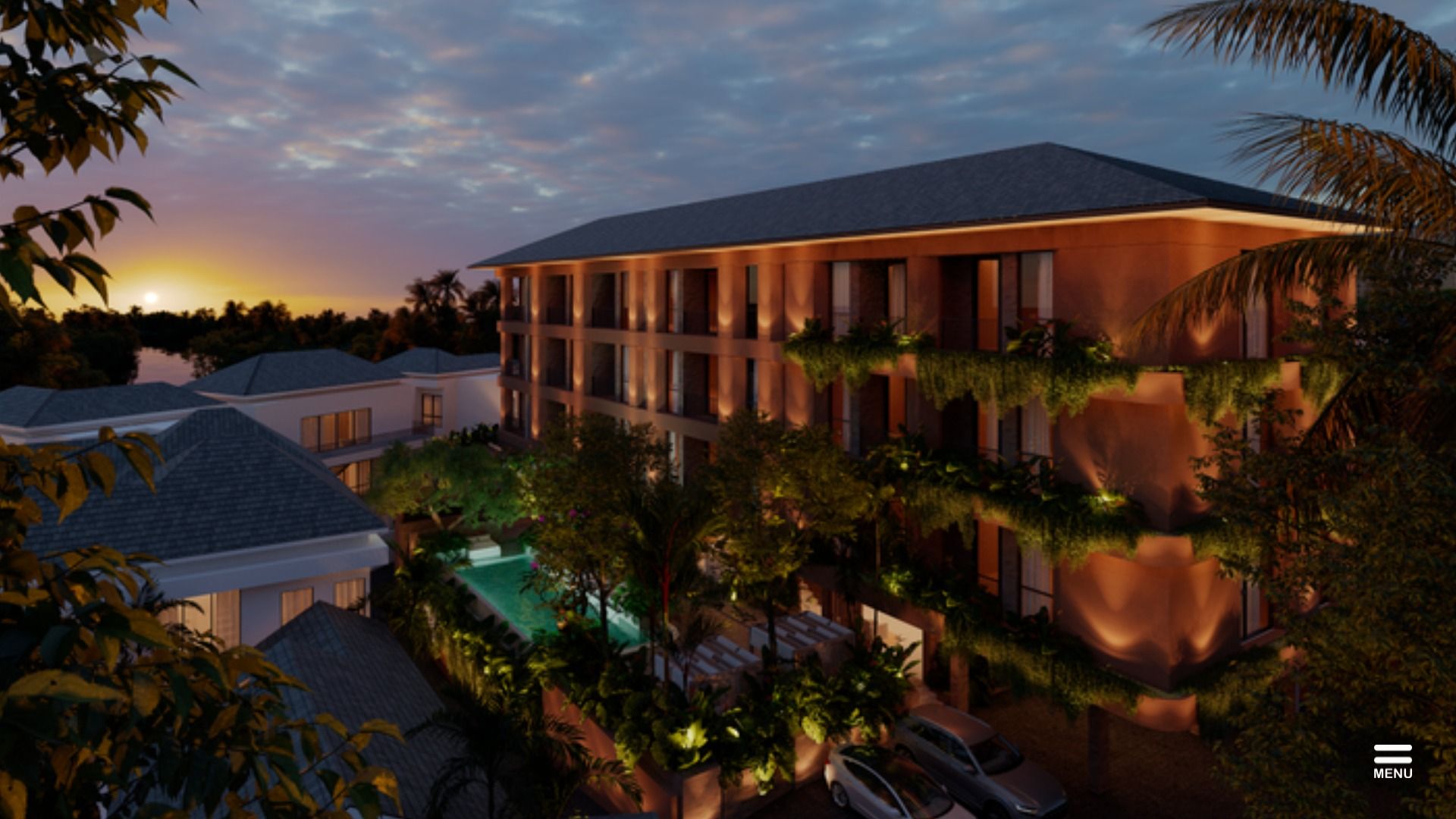
Sanuuri Residences is a managed complex in Sanur, Bali, a two-minute walk from the beach, developed by Investland Bali. The investment case rests on three pillars: a 50-year leasehold, roughly double the 25 to 30 year Sanur norm, a long-stay rental model built on Sanur's resident tenant base, and in-house management. Pricing is available on enquiry.
Key takeaways
- Five residence types, from a 73.5 square metre 2-bedroom apartment to a two-storey 3-bedroom pool villa, all handed over fully furnished.
- 50-year leasehold versus the typical 25 to 30 years in Sanur, which changes the resale maths a decade in.
- The rental model targets long-stay tenants: retirees, health-zone professionals and winter stayers, not nightly tourism alone.
- Sanur's demand drivers are documented: 6.9 million Bali arrivals in 2025 per BPS Bali, and a USD 620 million health special economic zone under Government Regulation 41 of 2022.
- Investland Bali manages short and long-term rentals in-house, so ownership works from abroad.
What exactly are you buying at Sanuuri?
You are buying a fully furnished residence on a 50-year leasehold inside a managed complex two minutes' walk from Sanur beach and its promenade. The unit mix runs from apartments to standalone pool villas, and every type is handed over rental-ready, with management available from day one.
The five residence types are: a 2-Bedroom Apartment of 73.5 square metres with access to the shared pool; a 1-Bedroom Loft with a mezzanine bedroom and private terrace; a 1-Bedroom Villa with private pool; a 2-Bedroom Villa with private pool; and a 3-Bedroom Pool Villa on 140 square metres of land with 163 square metres built over two floors. Shared amenities include a plunge pool, gym, sauna, co-working lounge, a lobby with concierge, a restaurant and a games lounge.
Location numbers are short and concrete: the beach and promenade in 2 minutes on foot, a supermarket in 6, the new hospital in 8, Bali Island School in 8, Sanur Harbour in 10, Icon Mall in 10 and the airport in roughly 25 by car. Each residence can be walked through in 3D at tours.sanuuri.com, and the full unit-by-unit detail sits in the Sanuuri buyer's guide.
Why does the 50-year leasehold matter?
Because leasehold value is a function of remaining years, and Sanuuri's term is roughly double the local standard. Typical Sanur leaseholds run 25 to 30 years with extension options to be negotiated; Sanuuri's 50-year term keeps decades of value on the table at the point most owners sell.
| Typical Sanur leasehold | Sanuuri Residences | |
|---|---|---|
| Initial term | 25 to 30 years | 50 years |
| Remaining term after 10 years | 15 to 20 years | 40 years |
| Resale position in year 10 | Buyer is pricing a shortening asset | Buyer still gets more than the market's standard new lease |
| Inheritance runway | Often expires within the owner's lifetime | Extends across a generation |
The year-10 row is the one to sit with. An owner reselling a standard Sanur lease is offering fewer years than a buyer could get from a new project down the road. A Sanuuri owner reselling in year 10 is still offering 40 years, more than a typical new lease, which is a structurally stronger negotiating position. What happens at the very end of a term, extensions and inheritance included, is covered in what happens after a 50-year leasehold ends.
How does the long-stay rental model work?
Sanuuri's rental model is built around tenants who stay for months or years rather than nights: retirees trialling Sanur before buying, professionals connected to the town's health economic zone, school families and European winter stayers. Long-stay tenancy trades peak nightly rates for occupancy stability and lower operating friction.
This is a deliberate positioning choice, not a compromise. Holiday-let income in Bali swings with seasons, flight capacity and platform algorithms, and it carries heavy turnover costs: cleaning, check-ins, marketing, vacancy risk between bookings. Long-stay tenants generate fewer, longer contracts with predictable renewal conversations. The full trade-off analysis sits in long-term rentals vs holiday lets in Bali, and the tenant evidence in who actually rents long-term in Sanur.
Owners are not locked out of their own property. The model accommodates part-year use, occupying your residence for a season and releasing it to the rental pool when away. On returns, we will not print a promised yield. For market context, agents advertise 7 to 10 percent gross yields for well-located Sanur villas; treat gross figures with caution and model net of management, tax, maintenance and vacancy. The team shares realistic, unit-specific scenarios on enquiry.
What is the demand evidence in Sanur?
Sanur's demand drivers are unusually well documented for a Bali market. Bali received 6.9 million foreign arrivals in 2025, up 9.7 percent on 6.33 million in 2024, according to BPS Bali, with Australians the largest source market at roughly 1.63 million. On top of tourism, Sanur hosts Indonesia's first health special economic zone.
That zone, KEK Sanur, covers 41.26 hectares with around USD 620 million of projected investment under Government Regulation 41 of 2022. Its anchor, the Bali International Hospital, opened on 25 June 2025, inaugurated by President Prabowo, and sits 8 minutes from Sanuuri. A state-backed medical cluster brings staff, visiting specialists, patients' families and long-visit medical travellers, exactly the profile that rents quality housing for weeks and months.
Sanur itself is the stability end of the Bali spectrum: an established residential town with a flat, car-free, roughly 7 kilometre beachfront promenade, a mature expat community and infrastructure spending, rather than a hotspot priced on momentum. That thesis, and where it does not apply, is argued honestly in why stability beats hype in Bali property.
Who manages the property, and what do they handle?
Investland Bali, the developer, manages Sanuuri rentals in-house across both short and long-term stays. Owners get one accountable counterparty for tenant sourcing, contracts, housekeeping, maintenance and reporting, rather than a chain of agencies, and the buildings are managed by the team that built them.
Developer-led management aligns incentives in a way third-party arrangements often do not. The operator's brand is on the gate, so tenant quality, upkeep and honest reporting are reputational necessities rather than contract line items. Handover is fully furnished by design, which removes the fit-out gap between completion and first tenancy that costs absentee owners months of income.
For owners abroad, the practical meaning is that the property functions without them: no staff to employ personally, no security or mould worries during empty months, no 2am maintenance calls across time zones. That lock-up-and-leave quality is a large part of why managed complexes suit part-year residents better than standalone villas do.
What are the honest risks?
Every Bali property carries risks, and a credible investment case names them. The four that matter here: leasehold terms shorten, rental income is never guaranteed, Bali has genuine oversupply pockets, and rupiah earnings carry currency exposure for foreign owners.
- Term rundown. A leasehold is a depreciating term by construction. Sanuuri's 50 years softens this materially but does not repeal it; buy with your exit year in mind.
- Income variability. Long-stay demand is steadier than nightly tourism, but occupancy and rates still move. Model conservative scenarios, not brochure ones.
- Oversupply in parts of Bali. Villa pipelines in some districts are aggressive. Sanur's supply discipline and resident demand base mitigate rather than eliminate this.
- Currency and tax. Rupiah income translates at a floating rate, and non-resident rental income faces a 20 percent final withholding on gross rent, per PwC's Indonesia tax summaries, before treaty relief where available.
If a risk on this list is disqualifying for you, better to know before enquiring. If they are manageable, the remaining question is fit: which unit, which usage pattern, which numbers. That conversation starts with the team, or with the broader context in the complete Sanuuri overview.
Frequently asked questions
What tenure do Sanuuri buyers get?
A 50-year leasehold. Typical Sanur leasehold terms run 25 to 30 years with negotiated extensions, so Sanuuri's term is roughly double the local norm. The longer runway matters most at resale, when the remaining years are what the next buyer is pricing.
What does Sanuuri cost?
Pricing is provided on enquiry, by unit type and availability. Rather than publishing a list that dates quickly, the team shares current pricing, the payment schedule and the management terms directly, alongside 3D walkthroughs of each residence at tours.sanuuri.com.
Who manages the rentals and what do they handle?
Investland Bali, the developer, manages both short and long-term rentals in-house. That covers tenant sourcing and vetting, contracts, housekeeping, maintenance, and guest or tenant support, so owners who live abroad or use the property part-year are not running a remote landlord operation themselves.
Can I use the property myself and still rent it out?
Yes. Owners can occupy their residence and release it into the rental pool when away, a pattern that suits part-year residents such as European winter stayers. The management team handles the switchover, and every unit is handed over fully furnished so it is rental-ready from day one.
What returns should I expect?
Sanuuri does not promise yields. For market context, agents advertise 7 to 10 percent gross yields for well-located Sanur villas, and gross figures should be treated with caution and modelled net of management, tax, maintenance and vacancy. The team will walk through realistic scenarios for your unit and usage pattern on enquiry.
Sources
- BPS Bali (Badan Pusat Statistik Provinsi Bali), foreign arrivals data for 2024 and 2025
- Government Regulation 41 of 2022 establishing the Sanur Special Economic Zone
- Presidential inauguration of Bali International Hospital, 25 June 2025
- PwC, Indonesia Tax Summaries, 2026
- Sanur market listings and agent yield advertising survey, July 2026