
Sanur's long-term tenants fall into four groups: retirees renting for six to twelve months before buying, medical and professional staff drawn by the town's health special economic zone, families anchored to Bali Island School, and European snowbirds staying three to six months over winter. They rent for months or years, not nights, which steadies occupancy for owners.
Key takeaways
- Four tenant groups drive Sanur's long-stay market: trial-before-buy retirees, health-zone professionals, school families and winter snowbirds.
- The Bali International Hospital opened in June 2025 inside a 41.26-hectare economic zone with around USD 620 million of projected investment, per Government Regulation 41 of 2022.
- Bali's visitor base keeps refilling the tenant funnel: 6.9 million foreign arrivals in 2025, up 9.7 percent, per BPS Bali.
- Long-stay tenants want furnished, walkable, professionally managed homes near the promenade.
- For owners, the trade is peak nightly rates for occupancy stability and lower turnover cost.
Who rents long-term in Sanur?
Four tenant groups account for most of Sanur's long-stay demand: retirees trialling the town before committing to a purchase, professionals connected to the health special economic zone, families placed near Bali Island School, and Northern European snowbirds escaping winter. Each arrives through a different channel and stays on a different rhythm, which is precisely what makes the demand base resilient.
| Tenant group | Typical stay | Season | What they want |
|---|---|---|---|
| Trial-before-buy retirees | 6 to 12 months | Year-round | Furnished home near the promenade, walkability, healthcare within minutes |
| Health-zone professionals | 1 year plus, renewing | Year-round | Quality housing close to the hospital, reliable management, quiet |
| School families | Academic year, renewing | Aligned to school terms | 2 to 3 bedrooms near Bali Island School, safe streets, pools |
| European snowbirds | 3 to 6 months | November to March | Turnkey comfort, concierge, community, no setup burden |
Notice what is absent: the party-week tourist. Sanur's long-stay market is a residential market, closer in behaviour to a small coastal town than to a resort strip, and the town's demographics skew older and quieter than Canggu or Seminyak. That context shapes everything an owner should buy and how it should be run.
Why do retirees rent before they buy?
Because a Bali retirement is a large, reversible-only-at-cost decision, and sensible people test it first. A retired couple can live comfortably in Sanur on roughly USD 2,350 to 3,450 a month, according to bali.com's 2026 cost guides, so renting for a year costs a fraction of a purchase and answers the questions brochures cannot: wet season, healthcare, community, distance from grandchildren.
This group is the strategic heart of the market, for two reasons. First, they are numerous: Bali drew 6.9 million foreign arrivals in 2025 per BPS Bali, roughly 1.63 million of them Australians, the demographic pipeline from which Sanur's trial residents emerge. Second, they convert. A tenant who spends a year in a well-run complex is the most qualified buyer that complex will ever meet, which is why developers who manage their own rentals treat tenancy as a first meeting rather than a transaction.
For owners, trial retirees are close to ideal tenants: solvent, house-proud and present. They treat the property as a candidate home, not a backdrop for holidays.
How does the health zone change tenant demand?
KEK Sanur, Indonesia's first health special economic zone, covers 41.26 hectares with around USD 620 million of projected investment under Government Regulation 41 of 2022. Its anchor, the Bali International Hospital, opened on 25 June 2025, inaugurated by President Prabowo. A working medical cluster generates housing demand that tourism never does: staff contracts, visiting specialists, patients' families and recovery stays.
The tenancies this creates are textbook long-stay. Clinical and administrative staff sign annual leases near their workplace. Visiting consultants take furnished units for rotations measured in months. Families accompanying patients need somewhere calm within a short drive, often at short notice and for open-ended periods. None of these tenants shops on holiday platforms; they come through employers, the hospital's own network and local managers, channels that reward well-managed, immediately liveable properties.
The zone also compounds Sanur's existing healthcare credibility alongside BIMC and Siloam elsewhere on the island. For the fuller infrastructure story and what it means for values rather than rents, see the Bali International Hospital and Sanur's health zone and the data page on Sanur property market trends.
What do school families and snowbirds add?
School families bring the longest, most predictable tenancies: leases aligned to the academic year at Bali Island School, renewing as long as the posting or lifestyle lasts. Snowbirds bring dense seasonal demand, Northern Europeans taking three to six month lets across November to March, when their home countries are dark and cold and Bali is warm.
Families want two to three bedrooms, safe streets and a pool, and they are the stickiest tenants in the market; moving school-age children is a last resort, so a satisfactory landlord keeps them for years. Snowbirds want the opposite of burden: turnkey, furnished, concierge-supported living they can walk into with two suitcases. They are also repeat customers, returning to the same town, often the same unit, season after season. The snowbird economics from the owner's side, including pairing winter lets with your own summer use, are set out in the European snowbird's guide to wintering in Sanur.
Together the two groups fill the calendar intelligently: families and professionals hold the year-round base, snowbirds compress premium demand into the exact months European owners tend to be in residence themselves or away. Managing that mix is a scheduling exercise, which is one reason professional management earns its fee.
What does this mean for owners and yields?
It means the safest income strategy in Sanur is to serve residents, not visitors. Long-stay tenancy converts a volatile nightly business into a small number of durable contracts, cutting turnover, marketing and vacancy costs. The price is the peak nightly rate you occasionally see advertised, and it is usually a price worth paying.
On numbers, keep your scepticism switched on. Agents advertise 7 to 10 percent gross yields for well-located Sanur villas; treat gross figures with caution and model net, after management, tax, maintenance and empty months. A long-stay model tends to narrow the gap between gross and net precisely because it strips out turnover cost, but nothing removes the need to run the calculation. The full gross-to-net waterfall lives in Bali rental yields explained, and the model comparison in long-term rentals vs holiday lets.
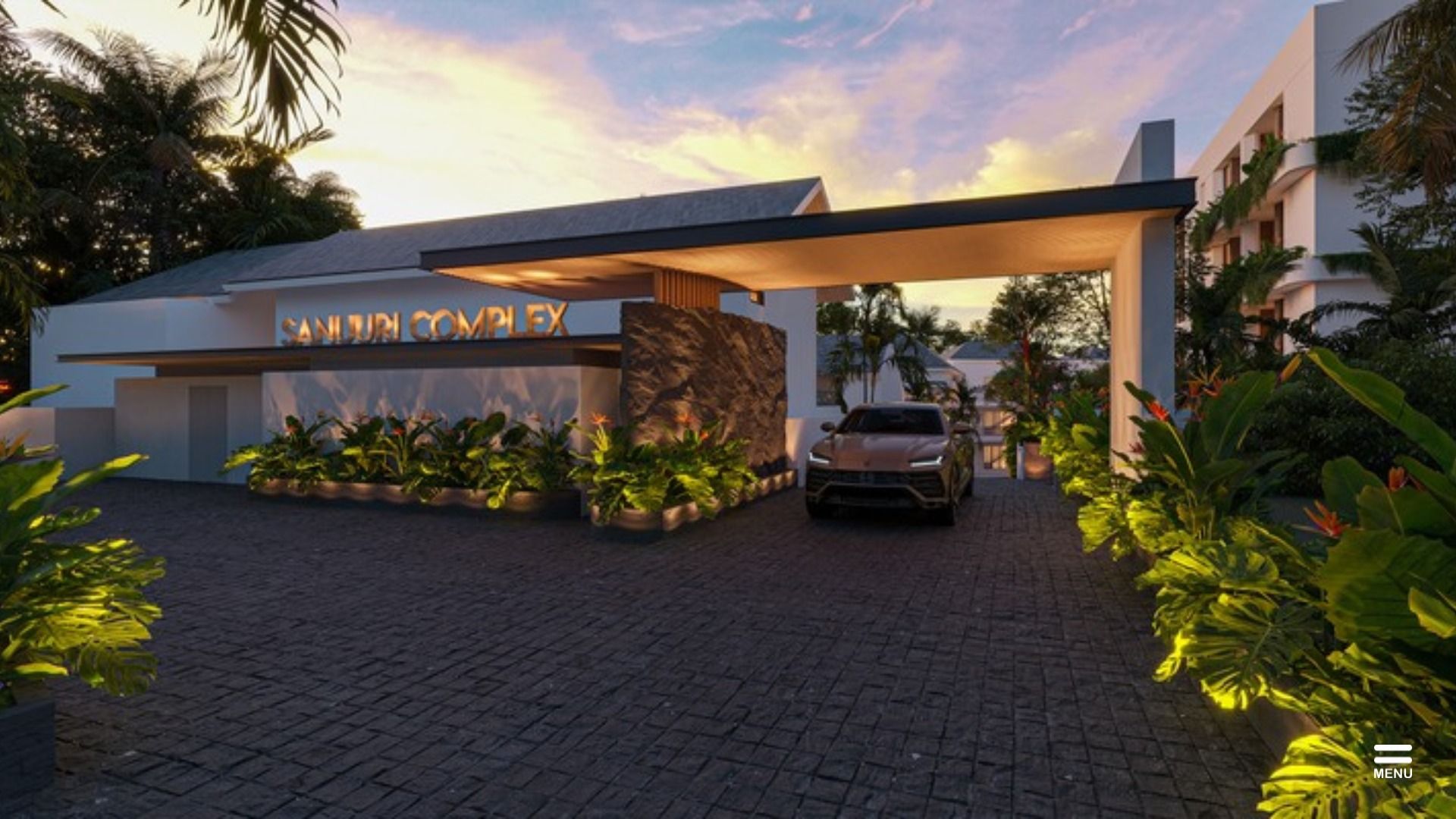
The property itself should match the tenant: furnished to move-in standard, within walking distance of the promenade, professionally managed and quiet. That specification is not accidental; it describes what Sanur's four tenant groups keep asking for, and it is the specification Sanuuri Residences was designed against, two minutes from the beach with management by Investland Bali.
Frequently asked questions
How long do long-term tenants in Sanur typically stay?
Snowbirds usually take 3 to 6 month contracts across the November to March season. Retirees trialling the area commonly rent for 6 to 12 months before deciding to buy. School families and health-zone professionals tend to sign annual leases that renew, so a single well-kept property can hold the same tenant for years.
Do long-term rentals earn less than Airbnb in Sanur?
Headline nightly rates are higher on holiday lets, but the comparison changes after occupancy gaps, cleaning, platform fees and management overhead. Long-stay contracts trade peak rates for filled months and lower running costs. Model both net, not gross, before deciding which suits your property.
Is the health zone really generating tenant demand?
The infrastructure is real and operating. The Bali International Hospital opened on 25 June 2025 inside KEK Sanur, a 41.26-hectare special economic zone with around USD 620 million of projected investment under Government Regulation 41 of 2022. Medical clusters bring staff, visiting specialists and patients' families who need quality housing for weeks to years.
What kind of property do Sanur's long-term tenants want?
Furnished, walkable and low-friction. The recurring requests are proximity to the beach and promenade, reliable internet, a pool, and professional management that fixes things quickly. Furnished units in managed complexes let tenants arrive with suitcases rather than shipping containers, which is exactly how multi-month tenants live.
Sources
- BPS Bali (Badan Pusat Statistik Provinsi Bali), foreign arrivals data for 2024 and 2025
- Government Regulation 41 of 2022 establishing the Sanur Special Economic Zone
- Presidential inauguration of Bali International Hospital, 25 June 2025
- bali.com, cost of living guides for Sanur, 2026
- Sanur agent yield advertising survey, July 2026