
In Bali property, stability beats hype because returns are decided by occupancy and tenant depth, not headline yields. Established areas such as Sanur, backed by government infrastructure spending and year-round resident demand, deliver steadier net income than influencer-driven hotspots where oversupply erodes rates. Boring, in this market, is what compounds.
Key takeaways
- Hyped areas attract identical supply faster than demand grows, which compresses occupancy and nightly rates for everyone.
- Advertised gross yields of 7 to 10 percent tell you nothing until voids, management, tax and maintenance are deducted.
- Sanur's demand is structural: a hospital that opened in June 2025, Indonesia's first health special economic zone, an international school and a resident expat base.
- Long-stay tenants (retirees, medical staff, families) produce lower peaks but far shallower troughs than holiday lets.
- Hotspots still suit one buyer type: full-time operators who actively manage marketing and pricing. Absentee owners should buy stability.
Why do hyped Bali locations disappoint investors?
Hyped locations disappoint because the same social-media visibility that attracts tenants attracts developers faster. New villa supply in a fashionable area can double in a few years while demand grows single-digit, so occupancy and nightly rates fall even as the area looks busier than ever. The investor is left holding an asset priced for a moment that has passed.
The mechanism is worth understanding because it repeats. A district becomes photogenic, land prices spike, and every plot sprouts a near-identical two-bedroom villa with a plunge pool. Each new completion competes for the same guest on the same booking platforms, and the only lever anyone has is price. Bali's visitor numbers are genuinely strong, with BPS Bali recording 6.9 million foreign arrivals in 2025, up 9.7 percent on 2024, but arrivals do not distribute themselves evenly across an oversupplied map. Meanwhile congestion arrives before infrastructure does: the roads, drainage and parking of a fishing village, now serving a resort district. Guests notice, reviews soften, and the premium erodes further. We put numbers to this pattern in Sanur vs Canggu: the investment numbers compared.
What does a stability investment look like in Bali?
A stability investment sits in an established area with tenants who stay for months, infrastructure that is funded and built rather than promised, and supply constrained by the fact that the town was already there. Its returns look unremarkable in a brochure and remarkably consistent in a bank statement.
Three tests separate stability from hype. First, tenant depth: who rents here when tourism has a weak quarter? Areas with retirees, professionals and school families keep earning; pure holiday markets do not. Our piece on long-term rentals versus holiday lets shows how different the two income curves look. Second, committed capital: is there government or institutional money physically in the ground? Third, price discipline: are you paying for land and buildings, or for a hashtag? Advertised gross yields of 7 to 10 percent for well-located Sanur villas circulate among agents; treat gross figures with caution and model net, because the honest net figure after management, voids and tax is what you will actually live on. Under PwC's Indonesia tax summaries, non-resident owners pay a 20 percent final withholding tax on gross rent (tax treaties can reduce it), which alone reshapes a gross-to-net comparison.
Why is Sanur the stability trade?
Sanur passes all three tests. It has been a functioning residential town for decades, its tenant base spans retirees, families and now medical professionals, and it is the site of the largest committed health-infrastructure investment in Indonesia. It is the closest thing Bali has to an infrastructure-backed property market.
The committed capital is specific, not rhetorical. KEK Sanur, Indonesia's first health special economic zone, covers 41.26 hectares with roughly USD 620 million in projected investment under Government Regulation 41 of 2022. Inside it, the Bali International Hospital opened on 25 June 2025, inaugurated by President Prabowo. A hospital of that scale imports exactly the tenants a landlord wants: staff on contracts, visiting specialists, patients' families staying for weeks. Around it sits the town that was already working: a 7 km flat, car-free beach promenade, Bali Island School eight minutes away, Sanur Harbour running fast boats to Nusa Penida and Lembongan, and the island's most established retiree community. Demand from Australia alone is deep, with roughly 1.63 million Australian arrivals in 2025 per BPS Bali, the island's largest source market, and Sanur is disproportionately where the over-60s among them settle.
How do stable and hyped areas compare on the numbers?
Compared line by line, the hyped area wins on brochure yield and loses on almost everything that determines realised return: occupancy volatility, tenant depth, supply pipeline and exit liquidity to end users rather than to the next speculator.
| Factor | Established area (e.g. Sanur) | Hyped hotspot |
|---|---|---|
| Primary tenant | Retirees, medical and school families, long-stay professionals | Short-stay tourists and nomads |
| Income pattern | Steady monthly rents, shallow seasonality | High peaks, deep low-season troughs |
| Occupancy volatility | Low; leases run 6 to 12 months | High; repriced nightly against new supply |
| New supply pipeline | Constrained by existing town fabric | Heavy; every land plot is a competitor |
| Infrastructure | Funded and built (hospital, SEZ, promenade) | Lagging traffic, drainage and parking |
| Wear and operating cost | Lower; long-stay tenants, fewer turnovers | Higher; weekly turnovers, heavier maintenance |
| Exit buyer | End users: retirees and lifestyle owners | Mostly other investors chasing the same yield story |
None of this says a hotspot villa cannot have a spectacular year. It says the spectacular year is the tail of a wide distribution, and the wide distribution is the problem. An owner living in Melbourne or Munich cannot re-market a villa nightly or renegotiate with a management company mid-slump. For the risk map behind these factors, see the real risks of Bali property investment, and for the arithmetic underneath yield claims, Bali rental yields explained.
Who should still choose the hyped areas?
Buyers who operate property as a business. If you live on the island, manage marketing daily, reprice dynamically and renovate on trend cycles, a hotspot can out-earn Sanur. That honest concession is also the point: hype rewards labour, stability rewards capital.
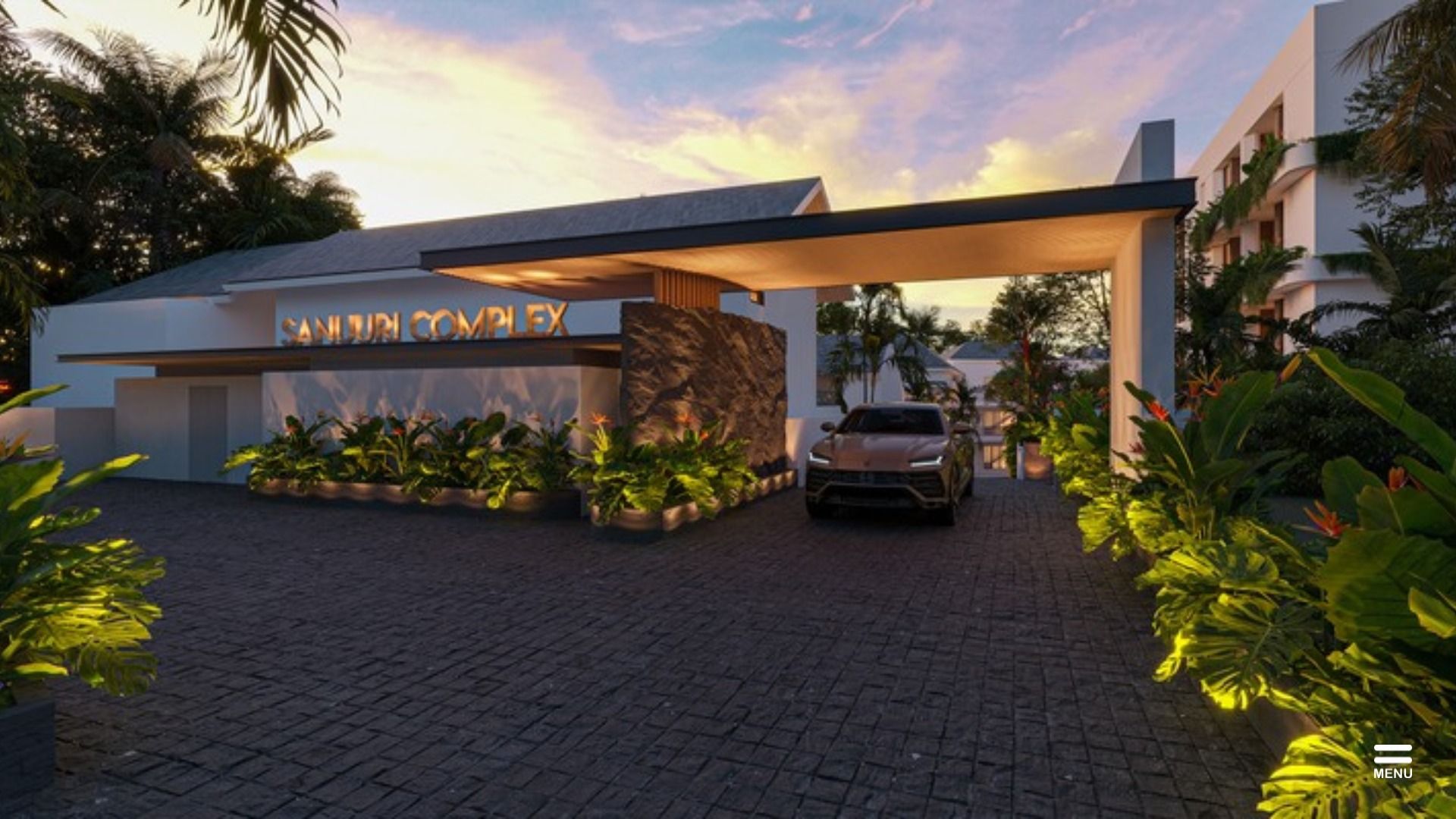
A second legitimate case is the pure lifestyle buyer under 45 who wants the surf, the gyms and the scene, and treats any rental income as a bonus. For everyone else, and especially for owners abroad, the stability trade is the rational one. It is the logic Sanuuri Residences is built on: a managed complex in Sanur on a 50-year leasehold, two minutes from the beach, with long-stay and short-stay rental management handled by Investland Bali, so the owner holds the steady asset without becoming the operator. We set out the full model in the Sanuuri investment case.
Frequently asked questions
Is Sanur a boring place to invest?
Boring in the sense that returns come from occupancy rather than speculation, yes. Sanur has resident demand, a 7 km car-free promenade, an international hospital that opened in June 2025 and Indonesia's first health special economic zone. That is the kind of boring most investors say they want after their first hyped-area disappointment.
Do hyped areas like Canggu ever outperform Sanur?
In strong tourism years, a well-run villa in a hotspot can post higher peak-season income than a comparable Sanur property. The gap narrows or reverses once low seasons, longer voids, rate cutting and heavier wear are counted. Hotspots reward full-time, hands-on operators; stability rewards everyone else.
What does stability-adjusted return mean?
It means judging an investment by its net income after voids, management, tax and maintenance, weighted by how volatile that income is year to year. A property earning a steady 6 percent net often beats one that alternates between 10 and 2 percent, especially for owners who depend on the income or live abroad.
Does government investment in Sanur actually affect property demand?
Yes, measurably. The KEK Sanur health special economic zone covers 41.26 hectares with roughly USD 620 million in projected investment, and the Bali International Hospital inside it opened on 25 June 2025. Medical staff, visiting specialists and patients' families need months-long accommodation, which deepens exactly the long-stay tenant pool that stable rental income depends on.
Sources
- BPS Bali (Statistics Indonesia, Bali Province), foreign arrivals data, 2025 to 2026
- Government Regulation 41 of 2022 (KEK Sanur health special economic zone)
- PwC, Indonesia tax summaries, 2026
- Bali International Hospital opening, presidential inauguration, 25 June 2025