
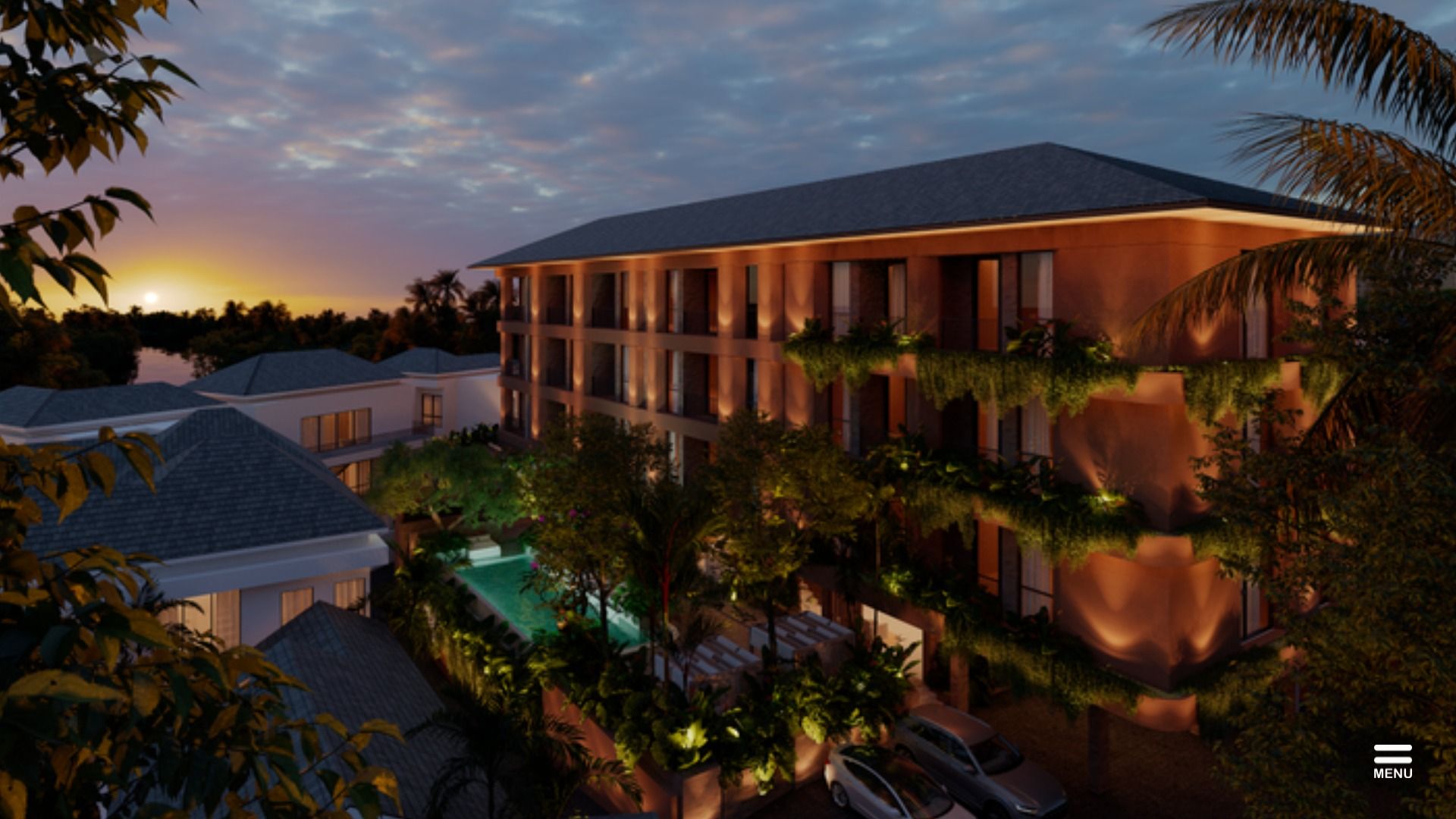
Sanur is Bali's stability play for property investors. Leasehold entries start around USD 175,000 and freehold beach-area villas list between USD 300,000 and 800,000, per July 2026 listings. Demand is anchored by retirees, families and the new KEK Sanur health zone, and agents advertise 7 to 10 percent gross yields. Model net, not gross.
Key takeaways
- Sanur freehold villas near the beach run roughly USD 300,000 to 800,000; leasehold entries start around USD 175,000 (July 2026 listings).
- KEK Sanur brings roughly USD 620 million in projected investment across 41.26 hectares, with Bali International Hospital open since June 2025.
- Bali received 6.9 million foreign arrivals in 2025, up 9.7 percent, per BPS Bali; Australians led with about 1.63 million.
- Agents advertise 7 to 10 percent gross yields for well-located Sanur villas; net is materially lower after fees, tax and voids.
- Foreigners invest via leasehold, Hak Pakai or a PT PMA with HGB. Nominee structures are illegal and unenforceable.
Is Sanur property a good investment in 2026?
Yes, for investors who want durable income rather than headline yields. Sanur combines deep long-stay tenant demand, state-backed health infrastructure, constrained supply and a residential character that does not depend on tourism trends. It is a poorer fit for investors chasing maximum short-term holiday-let income, where Canggu and Uluwatu still lead on gross.
The investment case rests on who occupies Sanur property. Canggu's income depends on a constant stream of two-week visitors and month-to-month nomads. Sanur's tenant base is slower moving: retirees renting for a year before buying, families tied to Bali Island School, medical and administrative staff arriving with the KEK Sanur health zone, and European snowbirds taking three to six months every winter. Slower tenants mean fewer void weeks, less wear and more predictable cash flow. That thesis, stability over hype, is one we argue in full in the case for boring returns in Bali property.
What do Sanur properties cost in 2026?
Based on July 2026 listings, freehold villas near Sanur beach list at roughly USD 300,000 to 800,000, and leasehold entry points start around USD 175,000. Apartments and lofts inside managed complexes open the market below standalone villa pricing, which is where most first-time Bali investors now enter.
| Segment | Typical asking range | Who buys it | Notes |
|---|---|---|---|
| Freehold villa near the beach | USD 300,000 to 800,000 | Indonesian buyers, foreigners via PT PMA structures | Freehold title itself is not available to foreign individuals |
| Leasehold villa | From roughly USD 175,000 | Foreign lifestyle buyers and investors | Typical Sanur terms run 25 to 30 years plus negotiated extensions |
| Apartment or loft in a managed complex | Below standalone villa pricing | Yield-focused investors, part-year residents | Lower entry, shared amenities, lock-up-and-leave format |
Two pricing notes matter. First, leasehold pricing is a function of the remaining term: a 25-year lease and a 50-year lease on similar buildings are very different assets, and most Sanur stock sits at the shorter end. Sanuuri Residences, for context, is sold on a 50-year leasehold, which is materially longer than the Sanur norm. Second, quoted prices exclude transaction costs, which we itemise below. For the wider process, from reservation to keys, see the complete guide to buying property in Bali as a foreigner.
Who rents in Sanur, and why does tenant depth matter?
Sanur's rental demand comes from four durable groups: retirees trialling Bali before committing, families at Bali Island School, staff and visitors connected to the KEK Sanur medical zone, and northern-hemisphere snowbirds. None of these depend on Instagram trends, and all favour stays of months rather than nights.
Tenant depth is the variable most yield spreadsheets ignore. A holiday let in an oversupplied area can show a beautiful projected yield and then sit empty through low season while forty near-identical villas undercut each other. A town with genuine reasons for twelve-month tenancies behaves differently: occupancy is higher, turnover costs are lower, and income survives a weak tourism quarter. Island-wide tourism remains a tailwind, with 6.9 million foreign arrivals in 2025, up 9.7 percent on 2024 according to BPS Bali, and Australians the top market at roughly 1.63 million. But Sanur's advantage is that its rental market does not live or die by those numbers. We compare the two income models in detail in long-term rentals vs holiday lets in Bali.
How big is the KEK Sanur effect?
KEK Sanur is the single largest infrastructure commitment in any Bali residential area: a 41.26-hectare health special economic zone with roughly USD 620 million in projected investment under Government Regulation 41 of 2022. Its anchor, Bali International Hospital, opened on 25 June 2025, inaugurated by President Prabowo.
For property investors the zone works on three levels. It employs a professional workforce that needs housing within a short commute. It draws medical travellers and their families, who prefer serviced accommodation and monthly rentals over hotel rooms. And it removes the healthcare objection that used to make older, wealthier buyers hesitate about Bali generally: a serious hospital is now eight minutes from central Sanur. Government zones can underdeliver, and honest investors should watch execution rather than press releases, but the hospital is open and treating patients, which puts this project past the vapourware stage.
What rental yields are realistic in Sanur?
Agents advertise 7 to 10 percent gross yields for well-located Sanur villas. Treat gross figures with caution and model net: after management fees, Indonesian rental tax of 10 to 20 percent on gross rent, maintenance and void periods, realistic net income is meaningfully lower than the advertised number.
Anyone quoting a guaranteed 15 percent should be shown the door politely. Guarantees at that level are usually paid out of your own purchase price for a limited period, then vanish. The honest arithmetic starts with realistic occupancy, subtracts a management fee, subtracts final rental tax charged on gross rent, then subtracts maintenance, utilities, insurance and a sinking fund for furniture. We publish the full gross-to-net waterfall, with a worked example, in Bali rental yields explained. Long-stay tenancies typically show lower gross but keep more of it, since management is lighter and voids are rarer, which is why Sanur's tenant profile flatters net returns even when Canggu wins on gross.
How should a foreigner structure ownership in Sanur?
There are three legitimate routes: leasehold (Hak Sewa), the standard contractual route needing no visa; Hak Pakai, a right-to-use title available to KITAS or KITAP holders, running 30 years and extendable to 80 in total; and a PT PMA foreign-owned company holding HGB (Right to Build) for up to roughly 80 years, suited to rental-business operators.
Freehold (Hak Milik) is reserved for Indonesian citizens, and no structure changes that. In particular, nominee arrangements, where an Indonesian citizen holds title on your behalf, are illegal and unenforceable; buyers have lost entire properties this way, and no reputable adviser will touch them. Which legitimate route fits depends on your plans. A pure investor with no residency plans usually takes leasehold. A resident retiree on a KITAS can hold Hak Pakai, which also covers strata apartments. An operator running multiple rental units often justifies the cost and admin of a PT PMA. Lease quality varies enormously, so the contract itself, term, extension mechanics, assignment rights, deserves as much diligence as the building.
| Route | Legal form | Typical duration | Requirements | Best suited to |
|---|---|---|---|---|
| Leasehold (Hak Sewa) | Contractual lease over the land and building | 25 to 30 years in Sanur, longer terms negotiable; Sanuuri offers 50 | None beyond a valid passport | Most foreign buyers and investors |
| Hak Pakai (Right to Use) | Registered title in the foreigner's name | 30 years, extendable to 80 in total | KITAS or KITAP residency permit | Resident retirees; strata apartments |
| PT PMA holding HGB | Foreign-owned Indonesian company holding Right to Build | Up to roughly 80 years | Company setup, licences, accounting | Rental-business operators with several units |
What taxes will a Sanur property investor pay?
Per PwC's Indonesia tax summaries: buyers pay BPHTB transfer tax of 5 percent of assessed value, sellers pay 2.5 percent final income tax, and new builds from developers attract VAT of around 11 to 12 percent. Rental income carries a final tax of 20 percent on gross rent for non-residents, or 10 percent for tax residents.
Tax residency, triggered broadly by spending 183 days or more in Indonesia in a year, therefore halves the rental tax rate, though it brings your wider income into the Indonesian net, and double-tax treaties can change the picture for Australians and most Europeans. Annual holding costs are light: land and building tax (PBB) is capped by statute at 0.5 percent of assessed value and lands at roughly 0.1 to 0.3 percent in practice, small compared with council rates in Australia or the UK. Budget the transaction taxes into your entry maths from day one; a 5 percent transfer tax plus notary and legal fees moves your true cost base meaningfully above the sticker price.
What are the main risks, honestly?
Five risks deserve respect: title and contract defects, developer failure on off-plan purchases, oversupply in holiday-let hotspots, currency movement between the rupiah and your home currency, and regulatory change. Each has a practical mitigation, and none is a reason to avoid the market if you do the work.
Title risk is managed with a proper notary (PPAT), a land office check and a lawyer reading the lease before money moves. Developer risk is managed by inspecting track record, land title and permits, and by staged payments tied to construction milestones. Oversupply risk is mostly a holiday-let phenomenon in nomad hotspots; Sanur's constrained, low-rise centre and long-stay tenant base blunt it, a dynamic we track quarterly in Sanur property market trends 2026. Currency risk cuts both ways; many leases and resale prices in the foreign-buyer segment are USD-denominated, which shifts the exposure rather than removing it. Regulatory risk is real but has trended in foreigners' favour over the past decade, with clearer visa products such as the E33 Second Home Visa and formalised ownership routes. What ties every mitigation together is buying from parties whose incentives run long: a developer who also manages the rental pool has to live with the quality of what it sold, which is the model behind the Sanuuri investment case.
Frequently asked questions
How much do you need to invest in Sanur property?
Leasehold entry points in Sanur start from roughly USD 175,000 based on July 2026 listings, while freehold villas near the beach typically list between USD 300,000 and 800,000. Apartments and lofts in managed complexes sit below standalone villa pricing. Budget a further 5 to 10 percent for taxes, notary and legal costs.
Can foreigners legally invest in Sanur property?
Yes, through three legitimate routes: leasehold (Hak Sewa), a Hak Pakai right-to-use title for KITAS or KITAP holders, or a PT PMA foreign-owned company holding a Right to Build (HGB) for rental businesses. Foreigners cannot hold freehold (Hak Milik), and nominee arrangements are illegal and unenforceable.
Are the advertised Bali rental yields realistic?
Treat them as a starting point, not a promise. Agents advertise 7 to 10 percent gross yields for well-located Sanur villas, but gross ignores management fees, Indonesian rental tax of 10 to 20 percent on gross rent, maintenance and empty weeks. Realistic net figures are meaningfully lower, so always model net before buying.
Does the KEK Sanur health zone actually help property values?
It is the strongest infrastructure story in Bali property. The 41.26-hectare zone carries roughly USD 620 million in projected investment under Government Regulation 41 of 2022, and Bali International Hospital has been open there since 25 June 2025. Hospitals of this scale anchor long-stay demand from staff, patients and older residents, which supports rents and resale.
Is Sanur better than Canggu for property investment?
They are different bets. Canggu offers higher headline holiday-let yields with more competition, noise and oversupply risk. Sanur offers steadier long-stay demand from retirees, families and medical workers, backed by state infrastructure spending. Investors chasing peak gross pick Canggu; investors prioritising durable net income tend to pick Sanur.
Sources
- BPS Bali, foreign arrivals statistics for 2025, published 2026
- Government Regulation 41 of 2022 establishing KEK Sanur
- PwC Indonesia tax summaries, 2026
- Sanur property listings survey, July 2026