
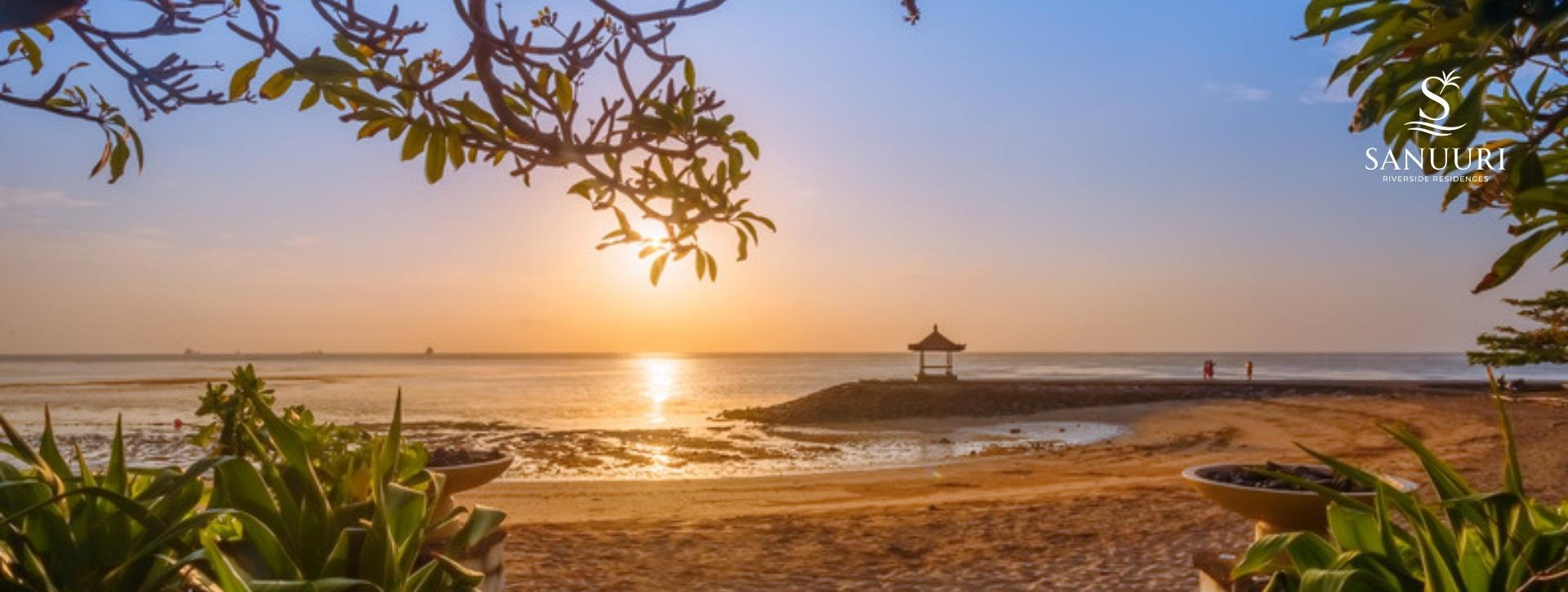
Sanur's calendar runs on two rhythms: headline events such as the Bali Kite Festival each July and August and the Sanur Village Festival, and the Balinese ceremonial cycle of Nyepi, Galungan and temple odalan. Most events are free, held on or near the beach, and easy to reach on foot from anywhere in town.
Key takeaways
- The Bali Kite Festival flies giant traditional kites over Padang Galak and Mertasari during the July and August trade winds.
- The Sanur Village Festival, running since 2006, is a free beachfront festival of food, music, art and sport.
- Nyepi, usually in March, shuts the entire island for 24 hours, including the airport. The ogoh-ogoh parades the night before are a highlight of the year.
- Galungan, Kuningan and local temple odalan repeat on a 210-day cycle, so ceremony is woven into ordinary weeks, not saved for one season.
- Bali welcomed 6.9 million foreign visitors in 2025 according to BPS Bali, yet Sanur's events remain village-scale and walkable.
What are the biggest annual events in Sanur?
Three fixtures anchor the year: the Bali Kite Festival in July and August, the Sanur Village Festival on the beachfront, and Nyepi, the island-wide day of silence that usually falls in March. Around them runs the Balinese ceremonial calendar, which brings temple festivals and processions to Sanur's streets every few weeks.
What makes Sanur unusual is the setting. Almost everything happens on or beside the beach, connected by the flat, car-free promenade that runs roughly 7 kilometres from Padang Galak in the north to Mertasari in the south. You can walk or cycle to every event in this article. That matters more than it sounds once you live here, because attending a festival never involves parking, hills or a scooter. For the wider picture of daily life, see our complete Sanur area guide.
When is the Bali Kite Festival and where do you watch it?
The Bali Kite Festival takes place during the south-east trade winds, usually across July and August, on the open coastal ground at Padang Galak, immediately north of Sanur, with flying also concentrated around Mertasari beach in the south. Competition days shift with the wind, so locals treat the whole dry season as kite season rather than one fixed weekend.
The kites themselves are the point. Banjar (village ward) teams spend weeks building traditional bebean (fish-shaped), janggan (dragon-tailed) and pecukan (leaf-shaped) kites, some several metres across with tails that stretch far downwind. Teams of young men launch them to gamelan accompaniment, and the sky above the coast fills with them through the afternoon. It is a competition between villages first and a spectacle for visitors second, which is exactly why it feels authentic.
For residents, the practical note is simply that the promenade and beach lawns become grandstands. Bring water, arrive mid-afternoon, and expect drone-like humming overhead for weeks. Many owners at Sanuuri time family visits for kite season, since the show is free and ten minutes' walk away. The promenade guide covers the best viewing stretches.
What is the Sanur Village Festival?
The Sanur Village Festival (SVF) is a free community festival held on the Sanur beachfront, typically over several days in the second half of the year. Founded in 2006 by the Sanur Development Foundation, it mixes food stalls from local warungs and hotels, live music, art exhibitions, water sports, and environmental programmes such as beach clean-ups and coral planting.
SVF began as a deliberate effort by Sanur's community to revive the area's identity, and it still reads that way. You will see Balinese dance next to jazz sets, cooking competitions next to photography exhibitions, and a strong sustainability thread that reflects how protective Sanur is of its beach. It is also one of the easiest places on the island to meet neighbours, both Balinese and foreign. If plugging into local life is on your mind, pair a festival visit with the groups covered in our guide to Sanur's expat community and clubs.
What happens during Nyepi, Bali's day of silence?
Nyepi is the Balinese Saka new year, usually falling in March, and it is observed as a full day of silence across the entire island. For 24 hours, from around 6am, nobody goes outside, lights stay low, and Bali's airport closes completely. Local pecalang wardens patrol to ensure the rules are kept, and they apply to residents, tourists and businesses alike.
The build-up is the loud part. On Nyepi eve, every banjar parades ogoh-ogoh, huge papier-mache demon effigies built over months, through the streets to gongs and firecrackers before they are ritually destroyed. Sanur's parades along Jalan Danau Tamblingan are family-friendly and easy to watch on foot.
New residents tend to worry about Nyepi and then end up loving it. You stock the fridge the day before, spend a day reading on the terrace, and experience the island with no traffic noise and, that night, a genuinely dark star-filled sky. It is one day a year, and it explains Bali better than any museum. A quiet day at home is no hardship in a place like this; our day in the life in Sanur shows why.
How do Galungan, Kuningan and odalan shape daily life?
Balinese Hinduism runs on the 210-day pawukon calendar, so the big ceremonial pair of Galungan and Kuningan arrives roughly every seven months rather than annually. Galungan celebrates the victory of dharma over adharma, and for about ten days Sanur's streets fill with penjor, the tall arched bamboo poles hung with offerings. Kuningan closes the period.
On top of that, each temple celebrates its own odalan (anniversary) every 210 days, and Sanur has many temples, including the coastal Pura Blanjong with its famous 10th-century inscribed pillar. In practice this means processions in ceremonial dress, gamelan drifting over the rooftops, and occasional short road closures are part of ordinary life here, several times a month.
The etiquette is simple: give processions the road, dress modestly near temples, never touch offerings on the pavement, and accept that some family-run shops close for a day or two around Galungan. Supermarkets and most restaurants stay open, as covered in our guide to groceries and shopping in Sanur.
What does Sanur's year look like month by month?
The table below sets out the recurring rhythm of the year. Exact dates move annually, because Nyepi follows the lunar Saka calendar and Galungan follows the 210-day pawukon cycle, so always confirm current dates locally before planning around them.
| Months | What happens | Notes for residents |
|---|---|---|
| January to February | Wet season; quieter beachfront, temple odalan continue | Green, warm, fewer visitors; mornings are often clear on the east coast |
| March | Nyepi (day of silence) and ogoh-ogoh parades the evening before | Stock up the day before; airport closed for 24 hours |
| April to June | Dry season begins; steady breeze builds, first kites appear | Prime months for the promenade, cycling and sea swimming |
| July to August | Bali Kite Festival at Padang Galak and Mertasari; peak dry season | Busiest visitor months; giant kites overhead for weeks |
| August to October | Sanur Village Festival window on the beachfront | Free entry; go hungry, the food stalls are the highlight |
| November to December | Wet season returns; Galungan and Kuningan often fall in this window (210-day cycle) | Penjor line the streets; some family businesses close briefly |
Why does the events calendar matter if you are thinking of moving here?
Because it tells you what kind of place Sanur is. Bali received 6.9 million foreign arrivals in 2025, up 9.7% on 2024, according to BPS Bali, and Australians led the way with roughly 1.63 million visits. Areas like Canggu absorbed that growth as nightlife and beach clubs. Sanur absorbed it as kite crowds and festival food stalls, and kept its village committee culture intact.
The calendar also signals investment. Sanur is home to Indonesia's first health special economic zone, the 41.26-hectare KEK Sanur with a projected investment of around USD 620 million under Government Regulation 41 of 2022. The town is being upgraded around its traditions rather than instead of them, which is rare in Bali.
For anyone weighing up a move, the honest advice is to visit twice: once in kite season, once in the wet season around Galungan. If both versions of Sanur appeal, the town will suit you year-round.
Frequently asked questions
When is the Bali Kite Festival in Sanur?
The main kite festival runs during the trade-wind season, usually in July and August, on the open coastal fields at Padang Galak and Mertasari, just north and south of central Sanur. Community kite teams fly giant traditional kites through much of the dry season, so you will see kites overhead for weeks either side of the official event.
Can foreign residents and tourists go out during Nyepi?
No. Nyepi, the Balinese day of silence in the Saka new year (usually in March), applies to everyone on the island for 24 hours. You stay inside your home or hotel, keep lights low and noise down, and the airport closes. Local pecalang wardens patrol the streets. The ogoh-ogoh parades the evening before are open to all and well worth seeing.
Is the Sanur Village Festival free to attend?
Yes, the Sanur Village Festival is a free community festival held on the beachfront. You pay only for food and drink from the stalls. It typically combines live music, food from local warungs and restaurants, art exhibitions, sports events and environmental programmes such as beach clean-ups.
Do shops and restaurants close during Galungan and Kuningan?
Some family-run warungs and local businesses close or run short hours for a day or two while owners attend ceremonies at their family temples. Supermarkets, most restaurants and tourist-facing services in Sanur generally stay open. Nyepi is the only day when everything, without exception, closes.
Sources
- BPS Bali (Badan Pusat Statistik Provinsi Bali), foreign visitor arrivals 2024 and 2025, published 2026
- Government Regulation 41 of 2022 establishing KEK Sanur, Indonesia's first health special economic zone
- Sanur Development Foundation, Sanur Village Festival programme materials, 2006 to present
- Bali Provincial Tourism Office (Dinas Pariwisata Provinsi Bali), annual events listings