
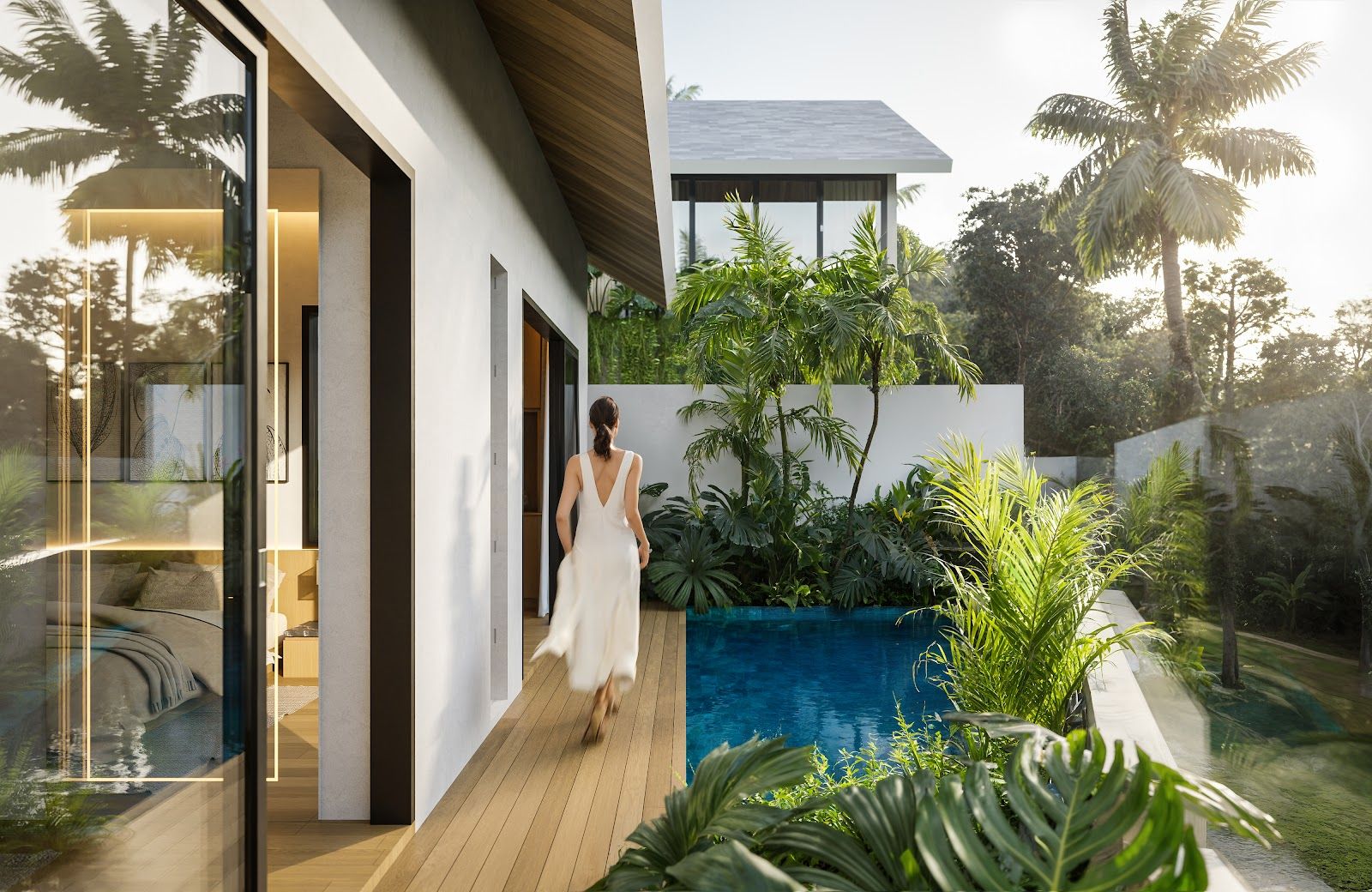
For most retirees, Sanur is the more practical base: it is flat, walkable, beside a calm sea, and home to the Bali International Hospital. Ubud wins on culture, arts and jungle scenery, and it rewards people who move there for those things. Its humidity, ravine terrain and distance from major hospitals count against ageing there full time.
Key takeaways
- Ubud is Bali's cultural capital: galleries, dance, ceremony, yoga and rice-terrace walks. Nothing on the coast matches it.
- Sanur has the healthcare: the Bali International Hospital opened there on 25 June 2025, inside a 41.26-hectare health economic zone with around USD 620 million of projected investment.
- Ubud's terrain is ravines, steps and narrow pavements; Sanur is flat with a roughly 7 km car-free promenade.
- Ubud's jungle humidity means more wet-season mould; Sanur's sea breeze and east-coast mornings are kinder on homes and joints.
- The two are only about an hour apart, so choosing Sanur does not mean losing Ubud.
Sanur or Ubud: which is better for retirement?
Sanur is the better retirement base for most people over 60, because retirement decisions are ultimately healthcare, mobility and daily-routine decisions, and Sanur wins all three. Ubud is the better choice for a specific retiree: one whose life is organised around art, ceremony, yoga or writing, who drives happily, and who accepts distance from big hospitals as the price of the jungle.
This is a real choice between two genuinely excellent places, not a straw man. Ubud is one of the most culturally rich small towns in Asia. The question is not which is nicer to visit, it is which one still works on a wet Tuesday in February when your knee is playing up. The rest of this article takes that question seriously.
What draws retirees to Ubud?
Ubud sits inland among river gorges and rice terraces, about an hour's drive from the coast, and it has been Bali's arts centre for a century, since the painters and musicians of the 1930s made it famous. Today that means galleries and museums such as Neka and ARMA, nightly dance performances, temple ceremony as a living rhythm, the Ubud Writers and Readers Festival, and the island's densest yoga and wellness scene.
The daily texture is real too: mornings on the Campuhan Ridge walk, organic cafes, a strong community of long-stay creatives and spiritual seekers, and evenings that feel fresher than the coast thanks to the modest elevation. Retirees who choose Ubud tend to choose it hard: they wanted exactly this, and no beach town would have substituted.
Where does Ubud genuinely win?
- Culture. Museums, dance, music, craft villages and ceremony on a scale Sanur does not pretend to offer.
- Scenery. River gorges, jungle canopy and rice terraces. Sanur's beauty is gentler: a beach, boats and a horizon.
- Wellness. The yoga studios, retreat centres and healers of Ubud form the island's deepest wellness economy.
- Cooler evenings. The elevation takes the edge off the nights, which some Europeans particularly appreciate.
- Intellectual community. Writers, artists and long-stayers with bookshelves. Dinner conversation skews accordingly.
Where does Sanur win for retirees?
- Healthcare. The Bali International Hospital opened in Sanur on 25 June 2025, inaugurated by President Prabowo, within KEK Sanur, Indonesia's first health special economic zone, 41.26 hectares with about USD 620 million of projected investment under Government Regulation 41 of 2022. Denpasar's hospitals are also nearby. Our Sanur healthcare guide covers the full network. From Ubud, serious treatment is generally an hour away.
- Flat walkability. Sanur's roughly 7 km car-free beachfront promenade and level street grid mean daily exercise and errands happen on foot or by bicycle. Ubud's ravine topography and narrow, busy pavements make walking a planned activity rather than a default.
- Sea air and swimming. The reef-protected lagoon gives calm, safe swimming most of the year, one of the best low-impact exercises available to older bodies. Ubud has pools; it does not have the sea.
- Drier homes. Coastal breeze keeps Sanur's houses noticeably less mould-prone than Ubud's jungle-shaded villas in the wet season.
- Connections. The airport is about 25 minutes away, and Sanur Harbour runs fast boats to Nusa Penida and Lembongan, which matters when grandchildren visit. Ubud adds 45 minutes to almost every journey.
The wider context, including how both towns score against Canggu, Seminyak and Uluwatu, is in our ranking of the best areas in Bali for retirees.
What about climate, mould and the wet season?
Both places are tropical, but they age differently through the year. Ubud's canopy and gorges hold humidity, so the November-to-March wet season means damper rooms, mustier wardrobes and more maintenance in hillside villas. Its compensation is those fresher evenings. Sanur, on the drier east coast, catches a sea breeze year-round and its mornings are often clear even in the wet months, which is when the promenade earns its keep: a flat, shaded walk that works between showers.
Costs are similar in both towns and modest by Western standards: a retired couple lives comfortably in Sanur on roughly USD 2,350 to 3,450 a month according to bali.com's 2026 guides, with a premium lifestyle at USD 4,000 to 6,000. Ubud budgets run in a similar band, trading restaurant variety for cheaper local produce.
How do property markets and ownership compare?
The legal framework is identical: foreigners cannot own freehold anywhere in Indonesia, and the legitimate routes are leasehold (Hak Sewa), Hak Pakai for KITAS or KITAP holders, or a PT PMA company with HGB title. Nominee arrangements are illegal and unenforceable, in Ubud's rice fields as much as on Sanur's beachfront.
Ubud's stock is dominated by standalone villas along ravines and rice fields, which look idyllic and carry real upkeep: gardens, pools, staff and jungle maintenance that an absentee or ageing owner must manage. Sanur offers more managed, walkable options alongside its villas. Based on July 2026 listings, Sanur freehold villas near the beach broadly run USD 300,000 to 800,000, with leasehold entries from about USD 175,000. Typical Sanur leasehold terms are 25 to 30 years; Sanuuri Residences offers a 50-year leasehold with on-site management, gym, pools and a concierge, two minutes' walk from the beach. Street-level detail is in our complete Sanur area guide.
| Factor | Sanur | Ubud |
|---|---|---|
| Setting | Flat coastal town, sunrise sea | Inland river gorges, rice terraces, jungle |
| Culture and arts | Festivals and temple life, modest galleries | Bali's cultural capital: museums, dance, ceremony |
| Healthcare | Bali International Hospital in town (opened 25 June 2025) | Clinics; major hospitals about an hour away |
| Walkability | Flat grid, ~7 km car-free promenade | Ravines, steps, narrow busy pavements |
| Exercise | Sea swimming, cycling, promenade walking | Yoga, ridge walks, pools |
| Climate feel | Sea breeze, drier east coast, warm nights | Fresher evenings, higher humidity, more wet-season mould |
| Community | Older long-stay expats, walking and sports clubs | Creatives, wellness circles, writers |
| Travel connections | Airport ~25 min; fast boats from Sanur Harbour | Roughly an hour to airport and coast |
| Housing stock | Villas plus managed complexes and apartments | Mostly standalone jungle and rice-field villas |
| Best for | Practical full-time retirement, ageing in place | Culture-led retirees who drive and love the jungle |
The verdict: coast, with the jungle an hour away
Choose Ubud if culture is the organising principle of your retirement and you are realistic about the driving, the damp and the distance to a hospital ward. Choose Sanur if you want the same island's ceremony and warmth with a hospital, a promenade and a swimmable sea built into daily life.
And remember the map: they are about an hour apart. Bali drew 6.9 million foreign visitors in 2025 according to BPS Bali, yet the Sanur-to-Ubud road remains an easy, regular day trip for residents. Living in Sanur with Ubud as your weekly outing gives you most of both. Living in Ubud with Sanur's hospital an hour away gives you rather less of the safety net, and at 70 that asymmetry is the honest deciding factor.
Frequently asked questions
Is Ubud or Sanur better for retirement healthcare?
Sanur, decisively. The Bali International Hospital opened in Sanur on 25 June 2025 inside the KEK Sanur health economic zone, and Denpasar's established hospitals are close by. Ubud has clinics for everyday care, but serious or emergency treatment generally means an hour or so by road to the hospitals in the south.
Is Ubud cooler than Sanur?
Slightly, especially at night. Ubud sits inland at modest elevation, so evenings feel fresher, but days remain hot and the humidity under the jungle canopy is higher, which brings more mould in the wet season. Sanur is warm year-round with a sea breeze and, as an east-coast town, often clearer mornings.
Can you walk around Ubud?
Less than visitors expect. Central Ubud's pavements are narrow and busy with traffic, and much of the housing sits along ravines and rice-field lanes with steps and steep driveways. Walks such as the Campuhan Ridge are lovely but recreational. Sanur is flat throughout, with a roughly 7 km car-free beachfront promenade that residents use daily.
How far apart are Sanur and Ubud?
Roughly an hour by car, around 25 to 30 km depending on the route and traffic. Many Sanur residents treat Ubud as a regular day trip for galleries, ceremonies and lunch among the rice terraces, then come home to the coast. Living in Sanur does not mean giving Ubud up.
Sources
- BPS Bali (Badan Pusat Statistik Provinsi Bali), foreign visitor arrivals 2024 and 2025, published 2026
- Government Regulation 41 of 2022 establishing KEK Sanur health special economic zone
- Official inauguration of Bali International Hospital, Sanur, 25 June 2025
- bali.com cost of living guides for Sanur, 2026
- Sanur and Ubud residential listings survey, July 2026