
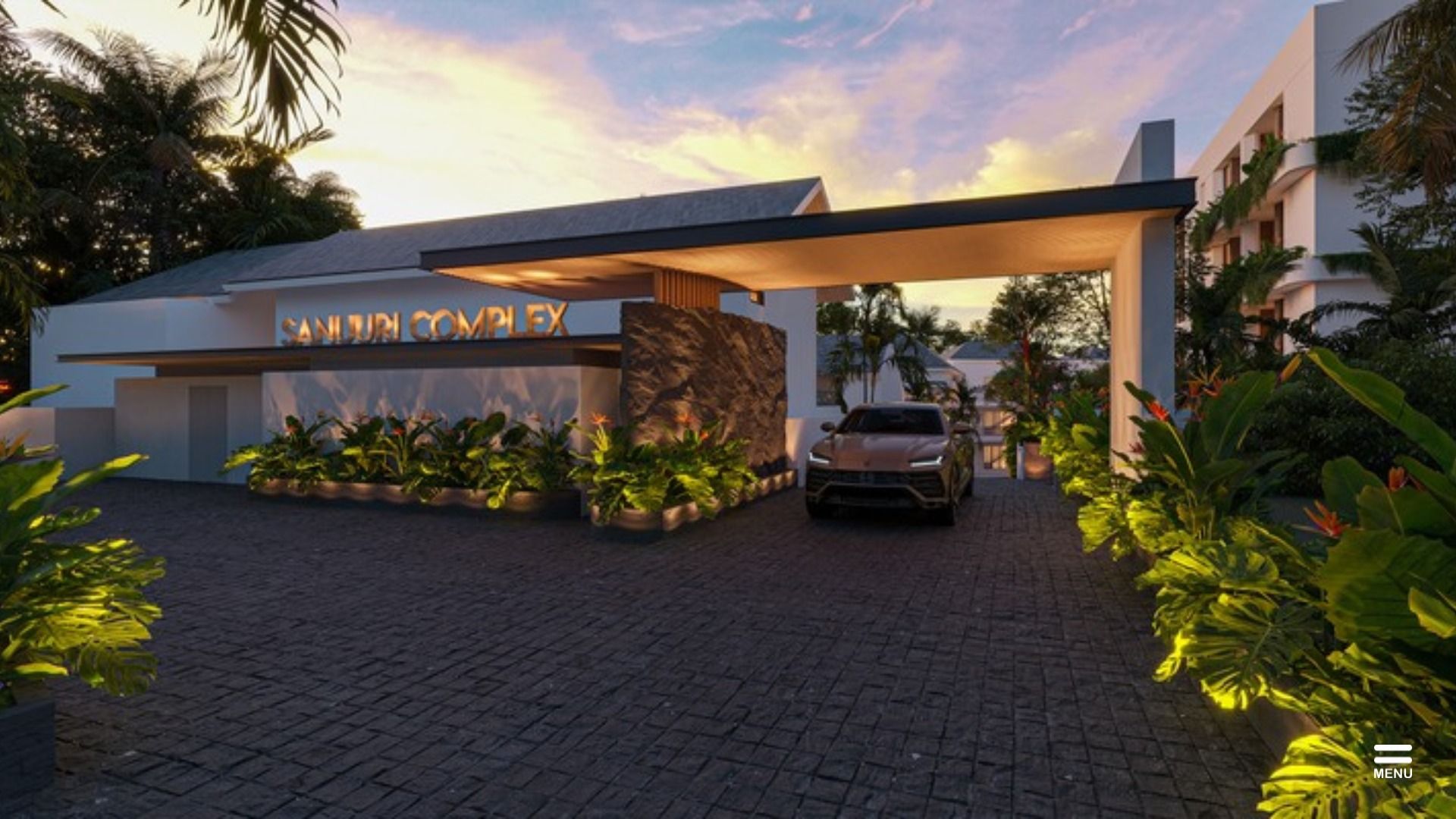
Retiring in Bali in 2026 takes three things: a long-stay visa, usually the E33F Retirement KITAS or E33 Second Home Visa, a budget of roughly USD 2,350 to 3,450 a month for a comfortable couple, and a legal leasehold home. Sanur, on the east coast, is the most practical base for retirees.
Key takeaways
- Two main visa routes: the E33F Retirement KITAS (age 60+, income-based, 1 year renewable) and the E33 Second Home Visa (no age limit, IDR 2 billion deposit, 5 or 10 years).
- A retired couple lives comfortably in Sanur on roughly USD 2,350 to 3,450 a month, per bali.com's 2026 guides. Premium living runs USD 4,000 to 6,000.
- Foreigners cannot own freehold. Leasehold is the standard, legal route; nominee structures are illegal and unenforceable.
- Bali International Hospital opened in Sanur on 25 June 2025, anchoring Indonesia's first health special economic zone.
- Sanur suits most retirees best: flat, walkable, a 7 km car-free promenade, and hospitals within minutes.
Which visa do you need to retire in Bali?
Most retirees use one of three visas: the E33F Retirement KITAS if you are 60 or older and prefer an income-based route, the E33E Silver Hair Visa if you are 60 or older and can place a USD 50,000 deposit, or the E33 Second Home Visa if you are under 60 or want 5 to 10 years of certainty in one grant. Tourist visas and repeated 60-day extensions are not a retirement plan, they are a treadmill.
The E33F Retirement KITAS is a 1-year permit, renewed annually, applied for through evisa.imigrasi.go.id and usually arranged via a licensed visa agent. The official line: age 60 or above, proof of USD 3,000 a month in pension or passive income, a bank statement showing around USD 2,000, proof of accommodation and health insurance. Some agents process applications from age 55 and with lower documented income in practice; requirements as applied by agents can vary, so confirm current practice before you rely on it. After 3 to 4 years of renewals you can apply for KITAP, Indonesia's permanent stay permit. Working is not allowed on this visa.
The E33E Silver Hair Visa is the 5-year alternative for over-60s: a USD 50,000 deposit in an Indonesian state-owned bank within 90 days of entry, proof of USD 3,000 a month in income, no sponsor needed, multiple entry included.
The E33 Second Home Visa is the route with no age limit. It grants 5 or 10 years against IDR 2 billion (about USD 125,000) held in your name at an Indonesian state-owned bank (Mandiri, BNI, BRI or BTN), placed within 90 days of approval and maintained for the life of the visa. Property can substitute for the deposit, but only property worth USD 1 million or more held under Hak Pakai title, which rules out most buyers. A spouse, children under 18 (or up to 25 if unmarried students) and parents can join on dependent E31 permits, and one deposit covers the whole family. Earning Indonesian-source income is not allowed, although remote work for a foreign employer is tolerated. KITAP becomes possible after 3 years.
| Requirement | E33F Retirement KITAS | E33E Silver Hair Visa | E33 Second Home Visa |
|---|---|---|---|
| Minimum age | 60 (some agents process from 55) | 60 | None |
| Duration | 1 year, renewable | 5 years | 5 or 10 years |
| Financial proof | USD 3,000/month income, ~USD 2,000 bank balance | USD 50,000 deposit plus USD 3,000/month income | IDR 2 billion (~USD 125,000) deposit |
| Deposit bank | Not required | Indonesian state-owned bank, within 90 days of entry | Mandiri, BNI, BRI or BTN, within 90 days of approval |
| Family included | Separate applications | No sponsor needed; separate applications | Spouse, children and parents on E31 permits, one deposit |
| Path to KITAP | After 3-4 years of renewals | Yes, in time | After 3 years |
| Work allowed | No | No | No Indonesian-source income; remote foreign work tolerated |
The full application process, document list, costs and renewal mechanics are covered in our Bali retirement visa (KITAS) guide for 2026.
How much does it cost to retire in Bali?
A retired couple lives comfortably in Sanur on roughly USD 2,350 to 3,450 a month, according to bali.com's 2026 cost of living guides, with premium lifestyles running USD 4,000 to 6,000. That covers rent on a good villa or apartment, eating out several times a week, a cleaner, transport and insurance contributions.
The spread depends mostly on housing. Long-term rent is the largest line, followed by health insurance, which climbs with age and is the cost item retirees most often underestimate. Groceries mix cheap local produce with imported goods at European prices; a meal at a local warung costs a fraction of a restaurant on Jalan Danau Tamblingan, Sanur's main dining street. Domestic help, a driver for airport runs and gardeners are affordable enough that most retired couples employ at least a part-time cleaner.
On the capital side, Sanur freehold villas near the beach trade at roughly USD 300,000 to 800,000, with leasehold entry points from about USD 175,000 based on July 2026 listings. We break the monthly numbers down line by line in our cost of living in Sanur for a retired couple.
Where should you retire in Bali?
For most retirees the honest shortlist is one town: Sanur. It is flat, walkable, quiet at night, has a 7 km car-free beachfront promenade, and since 25 June 2025 it has the new Bali International Hospital on its doorstep. Canggu, Seminyak and Uluwatu are built around a younger, faster crowd; Ubud is beautiful but inland, humid and further from emergency care.
The demographics follow the infrastructure. Bali received 6.9 million foreign arrivals in 2025, up 9.7% on 2024, per BPS Bali, and while the surf coasts absorb the under-35s, Sanur's visitors and residents skew markedly older and stay longer. The town has proper supermarkets, banks, pharmacies, an international school (Bali Island School) and Sanur Harbour for fast boats to Nusa Penida and Lembongan. It is a functioning residential town, not a resort strip.
Sanur is not for everyone, and we say so plainly in why Sanur is Bali's best area for retirees (and who it isn't for). Surfers will find the reef-protected water tame, and anyone chasing nightlife will be in bed before Sanur is. For a street-level view of neighbourhoods, from the beachfront to the quieter south, see our complete Sanur area guide.
Can you own a home in Bali as a foreigner?
Foreigners cannot own Indonesian freehold (Hak Milik), and no visa changes that. There are three legitimate structures: leasehold (Hak Sewa), Hak Pakai title, and a PT PMA company holding Hak Guna Bangunan (HGB). Nominee arrangements, where an Indonesian citizen holds freehold on your behalf, are illegal and unenforceable, and any agent proposing one should be shown the door.
Leasehold is the standard route and needs no visa at all: a registered contractual right to the property for a fixed term. Typical Sanur leasehold terms run 25 to 30 years with negotiated extension options. Sanuuri Residences offers a 50-year leasehold, which is materially longer than the Sanur norm and matters if you are 62 and thinking about your heirs. Hak Pakai (Right to Use) is a land title available to individuals holding a KITAS or KITAP, granted for 30 years and extendable to 80 in total, and it is also the route for strata apartments. A PT PMA holding HGB, with rights running up to roughly 80 years, is the structure for owners running a genuine rental business.
On transaction taxes, per PwC's Indonesia tax summaries: the buyer pays BPHTB transfer tax of 5% of assessed value, the seller pays 2.5% final income tax, and new builds from developers attract VAT of around 11 to 12%. Annual land and building tax (PBB) is capped at 0.5% of assessed value and typically works out at 0.1 to 0.3%, small in practice.
How good is healthcare in Bali for retirees?
Better than most retirees expect, and improving fastest exactly where retirees live. Bali International Hospital opened in Sanur on 25 June 2025, inaugurated by President Prabowo, as the anchor of KEK Sanur, Indonesia's first health special economic zone: 41.26 hectares with around USD 620 million in projected investment under Government Regulation 41 of 2022.
Beyond the new hospital, Bali's established options are BIMC (part of the Siloam group, with sites serving Nusa Dua and Kuta) and Siloam Hospital Bali in Kuta, which holds JCI accreditation. Pharmacies are plentiful, dental care is inexpensive by Australian or European standards, and house-call doctors are routine. The honest caveat: complex cardiac, oncology and neurosurgical cases are still sometimes referred to Singapore or home. Comprehensive health insurance is a visa requirement for the E33F and, at retirement age, non-negotiable regardless.
How do taxes work when you retire in Bali?
Spend 183 days or more in Indonesia in a 12-month period and you generally become an Indonesian tax resident. What that means for a foreign pension depends on the tax treaty between Indonesia and your home country, so a one-hour session with a cross-border adviser before you move is money well spent.
If you rent out property, the headline rates per PwC's Indonesia tax summaries are clear: non-residents pay a 20% final withholding tax on gross rent (tax treaties can reduce this), while tax residents pay a 10% final tax on gross rent. Buying and holding costs are covered above. None of this is exotic, but sequencing matters: your visa class, day count and property structure interact, and the cheap mistake is deciding each one separately.
What does the move actually look like?
A realistic timeline from decision to move-in is 6 to 12 months, and the visa is rarely the bottleneck. The slow parts are selling or letting your home, sorting insurance, and deciding what you are actually moving for: full-time relocation, or six months a year with a lock-up-and-leave base.
The working order most couples follow: spend a trial month in Sanur outside high season; choose the visa route and engage a licensed agent; secure health insurance while you are still insurable at good rates; then solve housing, renting first or buying into a managed complex if you do not want to run staff, pools and security yourself. Sanuuri Residences in Sanur was designed around exactly this brief: fully furnished apartments, lofts and pool villas on a 50-year leasehold, two minutes' walk from the beach, with a gym, sauna, co-working lounge, concierge and rental management by Investland Bali for the months you are away. Three-dimensional walkthroughs are available at tours.sanuuri.com if you want to inspect it from your sofa.
Frequently asked questions
Can I retire in Bali on the Australian Age Pension alone?
It is tight. The E33F Retirement KITAS officially requires proof of USD 3,000 a month in pension or passive income, and the full Australian Age Pension for a couple sits below that line. Some licensed agents process applications with lower documented income in practice, but requirements as applied by agents can vary, so confirm current practice before committing. Check your pension portability with Services Australia first.
Do I need to buy property to retire in Bali?
No. Renting long term is common and no visa category forces you to buy. Property only interacts with a visa in one narrow case: the E33 Second Home Visa allows property worth USD 1 million or more held under Hak Pakai title to substitute for the bank deposit. For everyone else, buying is a lifestyle and financial decision, not an immigration one.
Is healthcare in Bali good enough for retirees?
For day-to-day care and most planned treatment, yes. Bali International Hospital opened in Sanur on 25 June 2025, and BIMC and the JCI-accredited Siloam Hospital Bali have served foreign patients for years. Complex cases are still sometimes referred to Singapore or your home country, which is why comprehensive health insurance is both a visa requirement and common sense.
Can foreigners own property in Bali outright?
Foreigners cannot hold Indonesian freehold (Hak Milik). The legitimate routes are leasehold (Hak Sewa), Hak Pakai title for KITAS or KITAP holders, or a PT PMA company holding Hak Guna Bangunan for rental businesses. Nominee arrangements, where an Indonesian holds freehold on your behalf, are illegal and unenforceable, so never treat them as an option.
Sources
- BPS Bali (Badan Pusat Statistik), foreign arrivals data, 2025-2026
- Directorate General of Immigration, Republic of Indonesia, evisa.imigrasi.go.id, 2026
- PwC, Indonesia tax summaries, 2026
- Government Regulation 41 of 2022, KEK Sanur (Sanur Special Economic Zone)
- bali.com, cost of living guides, 2026