
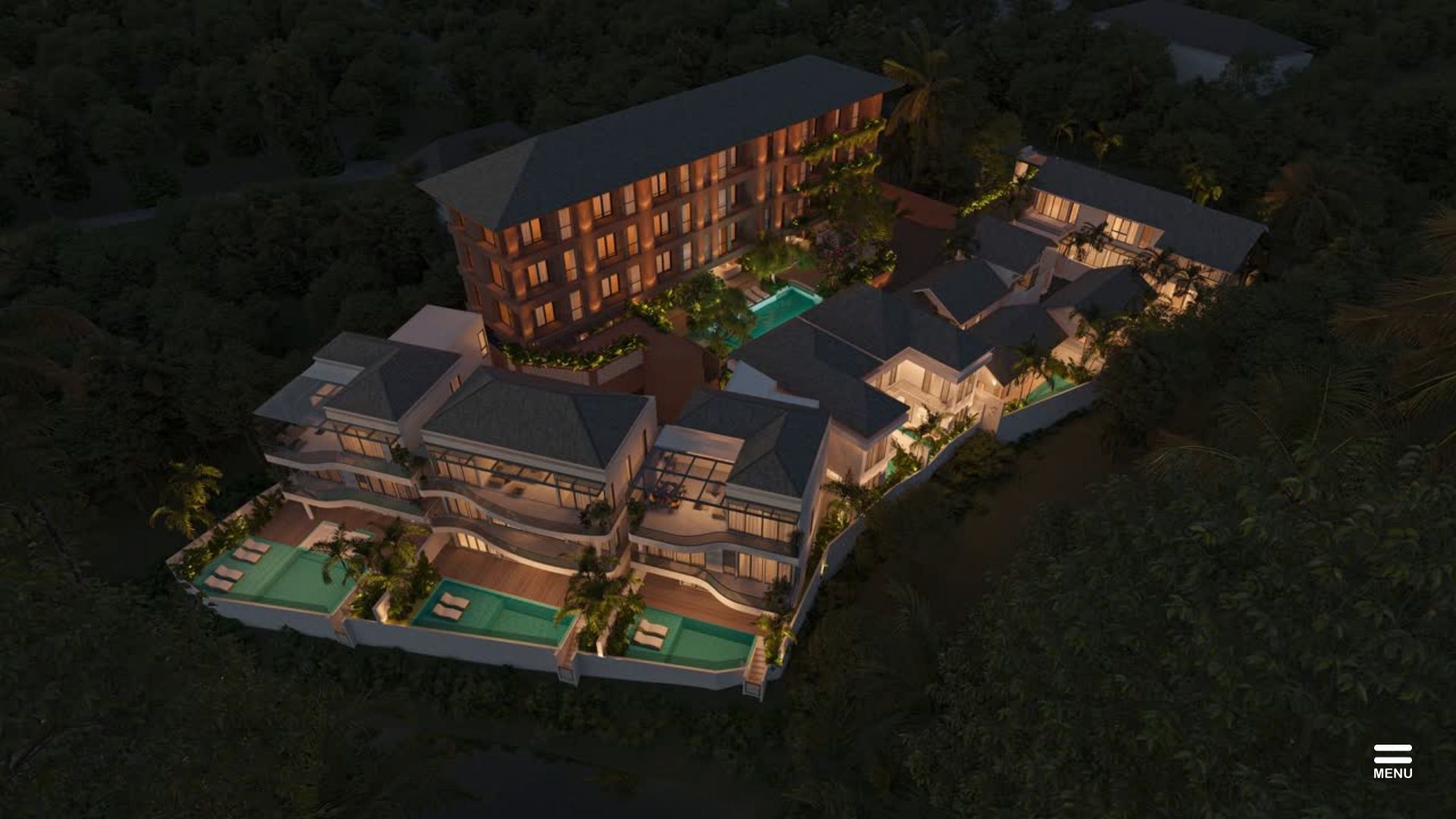
Bali property can be a good investment in 2026 for buyers who choose established areas, model net rather than gross yields and hold for the full lease term. Tourism hit a record 6.9 million foreign arrivals in 2025, per BPS Bali, but oversupply in trend-driven districts makes location and structure the deciding factors.
Key takeaways
- Demand is real: 6.9 million foreign arrivals in 2025, up 9.7% on 2024, per BPS Bali.
- Agents advertise 7 to 10% gross yields for well-located Sanur villas; treat gross figures with caution and model net.
- Non-resident owners pay 20% final withholding tax on gross rent, per PwC's Indonesia tax summaries. Build it into every projection.
- Yes for patient buyers in established, infrastructure-backed areas; no for anyone chasing guaranteed double-digit returns or quick flips.
- Sanur carries a government-scale tailwind: the 41.26-hectare KEK health zone with roughly USD 620 million in projected investment.
Is Bali property a good investment in 2026?
Yes, conditionally. The demand side is the strongest it has ever been, the legal routes for foreigners are well established, and entry prices remain low against comparable coastal markets in Australia or southern Europe. The conditions are that you buy in an established area, use a legitimate ownership structure, and judge the deal on net income over the full lease term.
The equally honest answer is that Bali punishes lazy money. Parts of the island have built short-stay villas faster than tourists can fill them, marketing decks still promise yields nobody audits, and a leasehold asset amortises to zero if you ignore the term. Bali property in 2026 is a good investment the way any property market is: for buyers who underwrite it properly. This page lays out the evidence on both sides so you can place yourself in the right column.
What returns can you realistically expect?
For well-located Sanur villas, agents advertise 7 to 10% gross yields; treat gross figures with caution and model net. Between the advertised number and your bank account sit tax, management, maintenance and empty weeks, and each takes a real bite.
Start with tax, because it is unavoidable: non-resident foreign owners pay a 20% final withholding tax on gross rental income, and tax residents pay 10%, per PwC's Indonesia tax summaries. An 8% gross yield is 6.4% after non-resident tax alone, before management fees or a single repair. Then add operating reality: cleaning, utilities, platform commissions, a maintenance sinking fund in a tropical climate, and void periods between tenants. The arithmetic is not a reason to avoid Bali, it is the difference between an investment and a disappointment. We walk the full gross-to-net waterfall in Bali rental yields explained, and the tax mechanics in rental income tax for foreign owners.
Capital growth exists but is harder to bank on, and leasehold assets need the remaining-term effect priced in. The buyers who do best treat appreciation as upside, not as the plan.
What is driving demand for Bali property?
Three forces: record tourism, longer stays and state-level infrastructure spending. Bali received 6.9 million foreign arrivals in 2025, up 9.7% on the 6.33 million of 2024, according to BPS Bali, with Australians the largest group at roughly 1.63 million. More of those visitors now stay for weeks or months rather than days, feeding a long-stay rental market that barely existed a decade ago.
The infrastructure story is most visible in Sanur. KEK Sanur, Indonesia's first health special economic zone, covers 41.26 hectares with roughly USD 620 million in projected investment under Government Regulation 41 of 2022, and its anchor, the Bali International Hospital, opened on 25 June 2025. A government betting hundreds of millions of dollars on a district is a different quality of signal than an influencer opening a coffee shop. It draws medical staff, patients and their families, all of whom need places to live, precisely the tenant depth described in our Sanur property investment guide.
What are the main risks?
Five, in rough order of damage: title problems, developer failure, local oversupply, currency exposure and regulatory change. Every one of them is manageable, and every year buyers lose money to each of them anyway.
Title and developer risk are controlled with independent due diligence: verified certificates, zoning checks, permit numbers and a developer track record you inspect rather than accept, as itemised in the real risks of Bali property investment. Oversupply is a location decision; the short-stay pipeline in trend-led districts is far heavier than in established residential towns. Currency exposure comes from earning rupiah-linked income against home-currency liabilities, softened where leases are agreed in USD. Regulation shifts periodically, which is one more argument for the clean legal structures over grey-area shortcuts. None of this is exotic. It is ordinary emerging-market underwriting applied to an unusually pleasant asset class.
Who should invest in Bali property, and who should not?
The verdict splits cleanly by buyer type. Bali rewards patient, structure-conscious investors with a use case of their own, and punishes yield tourists arriving with someone else's spreadsheet.
| Good fit: yes, if | Poor fit: no, if |
|---|---|
| You can hold for 10+ years and value income over speculation | You need to exit within 2 to 3 years or expect a quick flip |
| You buy in an established area with real infrastructure, such as Sanur | You buy wherever this year's social feed points |
| You model net yield after 20% withholding tax, fees and voids | You underwrite the brochure's gross projection |
| You will also use the property, so lifestyle value cushions returns | The asset must outperform equities on income alone to make sense |
| You use leasehold, Hak Pakai or a PT PMA with independent legal review | You are tempted by nominee shortcuts or unverified titles |
The strongest position of all is the owner-investor: someone who winters in the property, rents it the rest of the year and treats the yield as subsidy rather than salary. For that buyer the investment question and the lifestyle question answer each other.
Where in Bali holds its value best?
Established areas with permanent reasons to exist. A district anchored by hospitals, schools and government investment keeps its tenants when fashion moves on; a district anchored by a nightlife strip does not. That logic, developed fully in the case for stability over hype in Bali property, is why long-cycle money in 2026 leans east.
Sanur is the clearest example. It has been a functioning town for a century, its tenant base spans retirees, families at Bali Island School and now medical professionals at the KEK, and July 2026 listings still show leasehold entries from roughly USD 175,000 against USD 300,000 to 800,000 for beachside freehold stock. Yields there may never top a Canggu marketing deck, but the occupancy is steadier, the tenants are older and quieter, and the growth story is funded by the state rather than by sentiment. Boring, in property, is a compliment.
Frequently asked questions
What rental yield is realistic for Bali property?
Agents advertise 7 to 10% gross yields for well-located Sanur villas, and gross figures should be treated with caution. After rental income tax, management fees, maintenance and empty weeks, net yields land materially lower. Model the full waterfall on your own numbers before buying.
Is Bali property oversupplied in 2026?
In parts, yes. The short-stay villa pipeline in trend-driven districts such as Canggu has grown far faster than in established residential areas, which pressures occupancy and nightly rates there. Long-stay rental markets serving retirees, families and professionals are structurally tighter.
Can foreigners legally invest in Bali property?
Yes, through three recognised routes: leasehold (Hak Sewa), a Hak Pakai right-to-use title for residence permit holders, or a PT PMA foreign-owned company holding a Right to Build title. Freehold is reserved for Indonesian citizens and nominee workarounds are illegal and unenforceable.
What is the biggest mistake Bali property investors make?
Buying a projected gross yield instead of a property. Glossy projections of 12 to 15% returns routinely ignore tax, management, maintenance and voids, and often come from the party selling the unit. The second biggest mistake is skipping independent title and developer due diligence.
Sources
- BPS Bali, foreign visitor arrivals releases, 2026
- PwC, Indonesia Tax Summaries, 2026 edition
- Government Regulation 41 of 2022 establishing the Sanur special economic zone
- Sanur residential listings survey, July 2026