
Budget between 1 and 3 percent of your property's value each year to own it in Bali. The annual land and building tax (PBB) is small, typically 0.1 to 0.3 percent of assessed value. The real money goes on maintenance, service charges or staff, insurance and management, and those costs differ sharply between managed complexes and standalone villas.
Key takeaways
- PBB, Indonesia's annual land and building tax, is capped at 0.5 percent of assessed value and usually lands at 0.1 to 0.3 percent, per PwC's Indonesia tax summaries.
- Tropical maintenance is the biggest recurring cost: humidity, salt air and the November-to-March wet season punish buildings that are not kept up.
- A standalone villa needs its own security, pool care, gardening and admin. A managed complex bundles all of it into one service charge.
- Rental income usually covers running costs on a well-located property, but model net returns, not the gross yields agents advertise.
- Ask for the service charge budget in writing before you buy. A vague answer is a warning sign.
How much does it cost to own a property in Bali each year?
A realistic all-in figure is 1 to 3 percent of the property's value per year. On a USD 200,000 leasehold apartment that means roughly USD 2,000 to 6,000 annually covering tax, service charges, insurance, maintenance and utilities while you are in residence. Standalone villas with private pools and gardens sit at the top of that range; compact units in managed complexes sit at the bottom.
The line items behind that number are consistent everywhere on the island: the PBB land and building tax, service charges or their standalone equivalent (security, pool, garden, general upkeep), buildings and contents insurance, a maintenance reserve, utilities, and, if you rent the property out, management fees and rental income tax. None of them is alarming on its own. The mistake buyers make is planning for the purchase price and the one-off costs and taxes of buying in Bali, then treating everything after handover as noise. Over a 25 or 50 year lease term, the running costs are a six-figure sum. They deserve a proper budget line.
How much is Bali's annual land and building tax (PBB)?
PBB (Pajak Bumi dan Bangunan) is Indonesia's annual land and building tax. The statutory maximum is 0.5 percent of the government-assessed value, and according to PwC's Indonesia tax summaries the effective rate typically works out at around 0.1 to 0.3 percent. In practice it is a small bill, often a few hundred US dollars a year on a mid-range property, sometimes less.
Two practical notes. First, the assessed value (NJOP) is usually well below market value, which keeps the bill modest. Second, on leasehold property the tax legally follows the registered landowner, but lease deeds routinely allocate it to the lessee. Read your lease before you sign so you know which side of that arrangement you are on. Either way, PBB is the cheapest part of Bali ownership. Buyers arriving from Australia, where council rates alone commonly run into the thousands of dollars, tend to be pleasantly surprised.
What do service charges cover in a managed complex?
Service charges fund everything shared: security, the pool, landscaping, common-area cleaning and lighting, building maintenance and, in better-run complexes, a sinking fund for major works like repainting and waterproofing. They are usually billed per square metre of your unit or as a flat annual fee, and the amenity load drives the price.
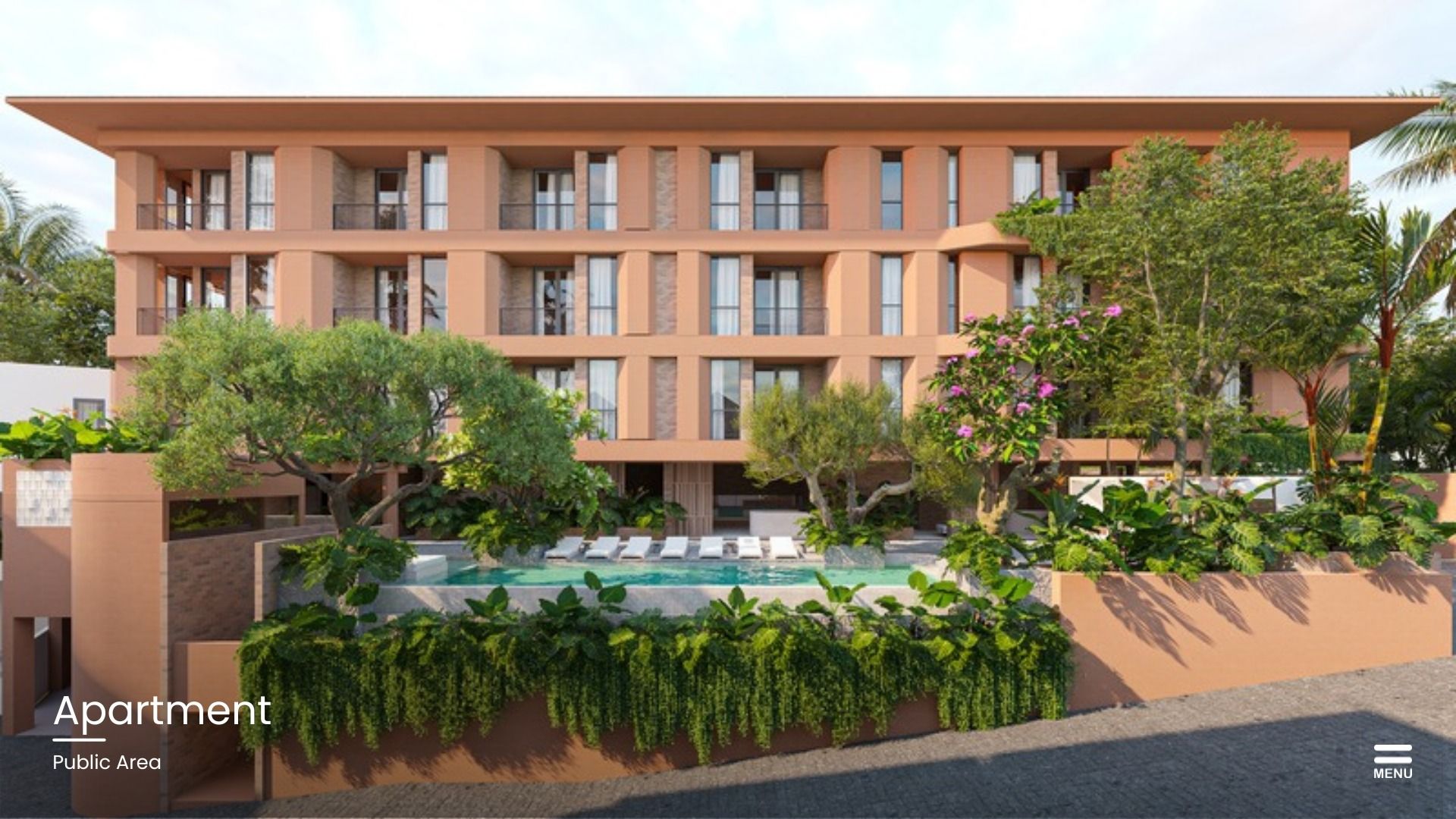
At Sanuuri Residences in Sanur, for example, the charge supports a shared plunge pool, gym, sauna, co-working lounge, a staffed lobby with concierge, and the grounds around the apartments, lofts and villas. A complex with that amenity set costs more to run than a bare compound of four villas sharing a gate, and it should. The questions to ask any developer are the same: what exactly does the charge cover, what is the annual budget, is there a sinking fund, and can owners see the accounts? A developer who answers those in writing is telling you something about how the building will be run in year ten. One who waves the question away is telling you something too.
How much should you budget for maintenance in a tropical climate?
A common rule of thumb is 1 to 2 percent of the building's value per year as a maintenance reserve. Bali's climate is the reason: high humidity all year, salt air near the coast, and a wet season from roughly November to March that finds every weak point in a roof, a window seal or an unventilated wardrobe.
The recurring jobs are predictable. Air-conditioning units need servicing several times a year, not annually, or they fail early. Exterior timber and render need repainting or re-oiling on a two-to-three-year cycle. Pool pumps, water heaters and water pumps are consumables, not fixtures. Mould prevention in the wet season means running dehumidifiers or air conditioning even when the house is empty, which is a genuine utilities cost for part-year owners. None of this is a reason not to buy. It is a reason to prefer buildings designed for the climate, to fund the reserve from day one, and to be sceptical of any running-cost estimate that assumes a Bali house behaves like a European one.
Do standalone villas or managed complexes cost less to run?
Managed complexes are usually cheaper to run per square metre, and they are always more predictable. A standalone villa duplicates every service for one household: its own security arrangement, its own pool technician, its own gardener, its own repairs coordination. A complex spreads those costs across all owners and puts a professional team in charge of the schedule.
| Cost item | Standalone villa | Managed complex |
|---|---|---|
| Security | Owner arranges guard or patrol service | Included in service charge |
| Pool care | Private pool technician, owner-managed | Shared pool included; private pools serviced by the operator |
| Garden and grounds | Own gardener, owner-managed | Included in service charge |
| Building maintenance | Owner finds and supervises contractors | Operator schedules and supervises works |
| PBB land and building tax | Payable per lease terms, typically small | Payable per lease terms, typically small |
| While you are away | House sits in staff hands; mould and security risk | Lock up and leave; operator keeps systems running |
| Cost profile | Flexible but volatile, owner does the admin | One predictable charge, audited budget |
The trade-off is control. A villa owner chooses every contractor and can cut costs aggressively in a lean year. A complex owner pays the charge whether or not they used the gym. For part-year residents the calculation is rarely close, because an empty standalone villa in the wet season is a liability that needs paid supervision, while a managed unit simply waits. That difference in ongoing burden is a large part of the case examined in our comparison of apartments versus villas as Bali purchases.
How do annual costs affect your rental return?
Running costs are the gap between the yield agents quote and the yield you bank. Agents advertise 7 to 10 percent gross yields for well-located Sanur villas; treat gross figures with caution and model net. After management fees, service charges, maintenance, voids and tax, a realistic net figure is meaningfully lower, and any projection that skips those lines is marketing, not analysis.
The tax line matters most for absentee owners. Under Indonesian tax law as summarised by PwC, non-resident owners pay a 20 percent final withholding tax on gross rental income, while tax residents pay a 10 percent final tax, with treaties sometimes reducing the non-resident rate. Demand, at least, is not the weak point: Bali received 6.9 million foreign arrivals in 2025, up 9.7 percent on the year before, according to BPS Bali, and Sanur's long-stay tenant base is steadier than the holiday-let trade elsewhere on the island. For the full gross-to-net waterfall, see our guide to what Bali rental yields really look like, and for fee structures, what property management in Bali should cost.
Frequently asked questions
Is there an annual property tax in Bali?
Yes. Indonesia charges an annual land and building tax called PBB. The statutory maximum is 0.5 percent of assessed value, and per PwC's Indonesia tax summaries the effective rate usually works out at roughly 0.1 to 0.3 percent. On most homes it amounts to a few hundred US dollars a year or less.
Who pays PBB on a leasehold property?
Legally the bill follows the registered landowner, but lease agreements routinely allocate it between the parties. Check your lease deed before you sign. Many Bali leases pass PBB to the lessee, and because the amounts are small it is rarely a point of negotiation, but it should never be a surprise.
How much are service charges in a Bali managed complex?
There is no universal figure. Charges are usually set per square metre or as a flat annual fee, and they vary with the amenity load: a complex with a gym, sauna and staffed lobby costs more to run than a bare compound. Ask the developer for the service charge budget and what it covers before you commit.
Can annual ownership costs be covered by rental income?
Usually, yes, if the property is well located and professionally let. Agents advertise 7 to 10 percent gross yields for well-located Sanur villas, and even after management fees, tax and maintenance a sensibly bought property should carry its own running costs. Model the net figure, not the gross, before relying on it.
Sources
- PwC, Indonesia tax summaries, 2026 (PBB land and building tax; rental income withholding rates)
- BPS Bali (Statistics Indonesia, Bali Province), foreign arrivals data, 2025
- Sanur property listings survey, July 2026 (market pricing and yield claims as advertised by agents)