
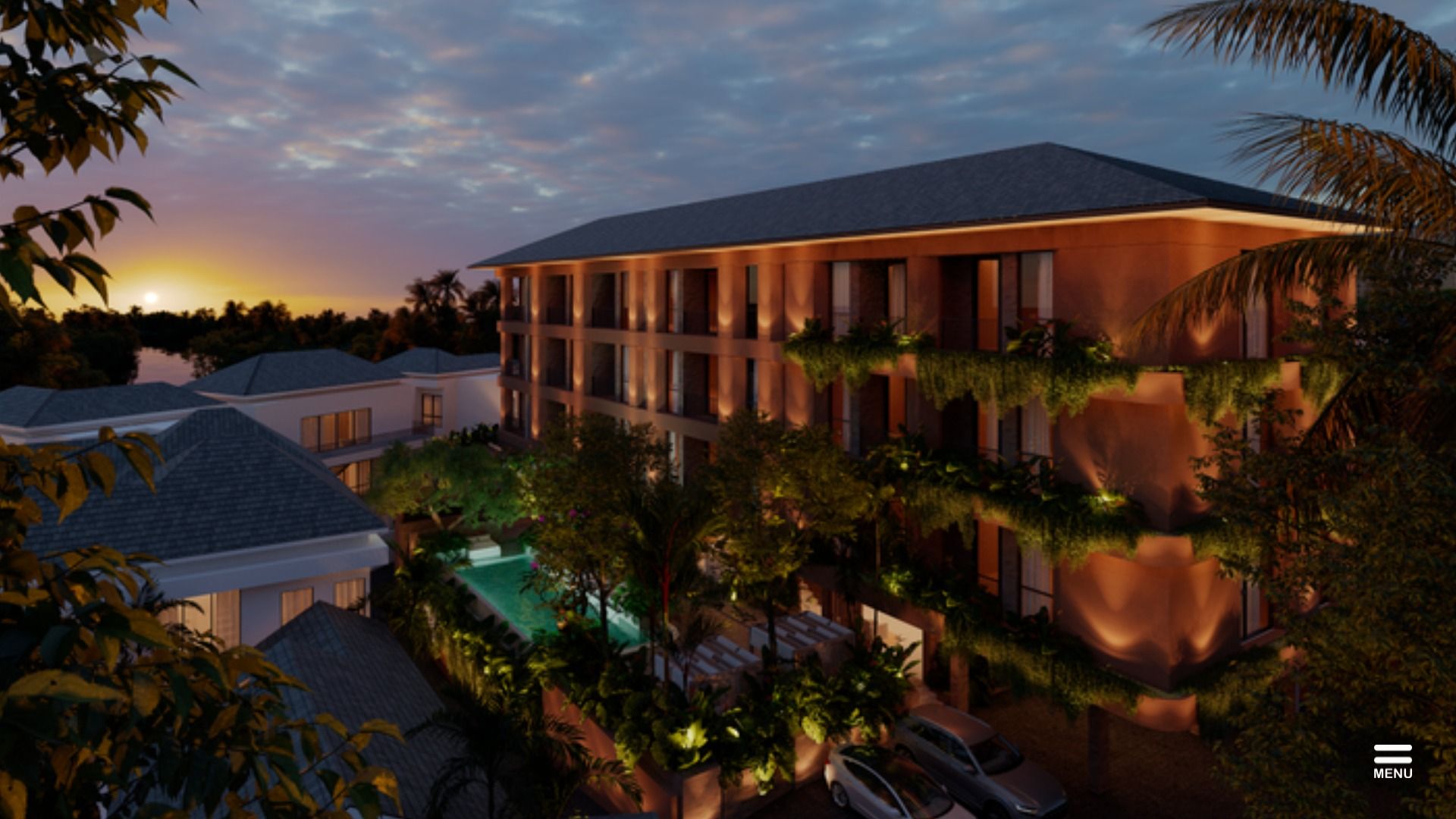
Bali appeals to Singapore and Hong Kong investors because entry prices are a fraction of home-market levels, gross yields are several times higher, and Denpasar is 2.5 to 3 hours from Changi. Ownership runs through leasehold, Hak Pakai or a PT PMA company, and Sanur is the island's stability play rather than its hype trade.
Key takeaways
- Sanur leasehold entries started around USD 175,000 in July 2026 listings, a small fraction of the capital a central private condo demands in Singapore or Hong Kong.
- Agents advertise 7 to 10 per cent gross yields for well-located Sanur villas; model net, but home-market residential yields sit in low single digits.
- Foreigners buy via leasehold, Hak Pakai (with a KITAS) or a PT PMA holding HGB. Freehold is off-limits and nominee structures are illegal.
- Non-residents pay 20 per cent withholding on gross rent per PwC; tax treaties can reduce it.
- Sanur's case is infrastructure-led: the KEK Sanur health zone, a new international hospital, and a long-stay tenant base.
Why is Bali suddenly on the radar for Singapore and Hong Kong money?
Because the capital efficiency gap is hard to ignore. A Sanur leasehold villa can be bought for less than a typical down payment on a central Singapore condo, in a market where Bali received 6.9 million foreign arrivals in 2025, up 9.7 per cent on 2024, per BPS Bali.
Policy at home has sharpened the comparison. Singapore's Additional Buyer's Stamp Duty for foreign purchasers stands at 60 per cent, per the Inland Revenue Authority of Singapore, which has pushed regional buyers to look outside the city-state for yield. Hong Kong scrapped its extra stamp duties in the 2024-25 Budget, but low rental yields and a soft price trend since 2021 have kept investors searching abroad anyway. Bali offers the reverse profile: low absolute entry, tourism-driven income, and a government actively investing in the destination. Proximity closes the deal. Singapore to Denpasar is 2.5 to 3 hours direct; Hong Kong is around five. You can inspect your asset over a weekend, something no London or Melbourne investment allows.
What does the entry price look like in SGD and HKD terms?
At a high level, a well-located Sanur leasehold costs roughly what a car park space plus stamp duty costs a foreign buyer in central Singapore. Sanur freehold villas near the beach ran about USD 300,000 to 800,000 in July 2026 listings, with leasehold entries from around USD 175,000.
We deliberately avoid quoting exchange-rate conversions that will be stale within a quarter. The structural point holds at any plausible rate: for the price of a modest suburban flat at home, a Singapore or Hong Kong buyer acquires a complete income-producing villa or apartment in a tourism economy, with capital left over. Most foreign-facing Bali developments market with USD-linked pricing, which suits HKD-based buyers in particular given the peg, and keeps comparison clean for SGD holders.
| Factor | Singapore (private condo) | Hong Kong (private flat) | Sanur (leasehold villa or apartment) |
|---|---|---|---|
| Typical entry capital | Well above USD 1 million centrally | Well above USD 1 million on Hong Kong Island | From ~USD 175,000 (July 2026 listings) |
| Foreign buyer levy | 60% ABSD (IRAS) | Extra duties removed 2024 | None; buyer pays 5% BPHTB on titled transfers |
| Gross rental yield profile | Low single digits | Low single digits | Agents advertise 7-10%; model net with caution |
| Tenure for foreigners | Freehold or 99-year leasehold | Government leasehold | Leasehold, Hak Pakai or PT PMA with HGB |
| Flight from home | 2.5-3 hours | ~5 hours | n/a |
How does ownership actually work for a foreign investor?
Foreigners cannot hold Indonesian freehold (Hak Milik). The three legitimate routes are leasehold (Hak Sewa), Hak Pakai title for individuals holding a KITAS or KITAP, and a PT PMA company holding HGB title for buyers operating a rental business. Nominee arrangements are illegal and unenforceable, and any agent proposing one should end the conversation.
Leasehold is the standard route and requires no visa or Indonesian entity. Typical Sanur terms run 25 to 30 years with negotiated extensions; Sanuuri Residences is sold on a 50-year leasehold, materially longer than the local norm, which matters for resale later. Investors planning a multi-unit rental operation often use a PT PMA holding HGB, which supports up to roughly 80 years of control and a proper commercial footing. Buyers who also want residency sometimes pair the purchase with Indonesia's investor-friendly visa routes, compared in our guide to the golden visa versus the Second Home Visa. The full structural picture, with costs, sits in the Sanur property investment guide for 2026.
What returns and taxes should you model?
Model gross-to-net honestly. Agents advertise 7 to 10 per cent gross yields for well-located Sanur villas; treat gross figures with caution and model net after management fees, maintenance, voids and tax. Non-residents of Indonesia pay a 20 per cent final withholding tax on gross rental income, per PwC's Indonesia tax summaries, and tax treaties can reduce that rate.
Indonesia holds tax treaties with both Singapore and Hong Kong, so your effective position depends on residence and structure; take advice rather than assuming the headline rate. Owners who become Indonesian tax residents by spending 183 or more days in country pay a 10 per cent final tax on gross rent instead. Annual holding costs are light: land and building tax (PBB) is capped at 0.5 per cent of assessed value by statute and typically works out around 0.1 to 0.3 per cent in practice. Getting money out is straightforward with documentation, covered step by step in our guide to currency, banking and repatriating rental income from Bali.
Why Sanur rather than Canggu or Uluwatu?
Because Sanur is the stability trade. It is an established residential town with government-backed infrastructure, a hospital-anchored economic zone and a long-stay tenant base, while Canggu is a higher-beta, oversupply-prone nomad market. Regional investors who have watched hype cycles at home tend to recognise the difference quickly.
The hard evidence: KEK Sanur, Indonesia's first health special economic zone, covers 41.26 hectares with around USD 620 million of projected investment under Government Regulation 41 of 2022, and the Bali International Hospital inside it opened on 25 June 2025. That is a demand engine for long-stay tenants, medical staff and health travellers, none of whom rent by the party weekend. Australians alone accounted for roughly 1.63 million arrivals in 2025 per BPS Bali, and Sanur is their traditional base on the island. The full argument, with the counter-cases conceded, is in why stability beats hype in Bali property.
Frequently asked questions
Can Singaporeans and Hong Kong residents buy property in Bali?
Yes, through the same legal routes open to all foreigners: leasehold (Hak Sewa) for most buyers, Hak Pakai title for individuals holding an Indonesian KITAS or KITAP, or a PT PMA company holding HGB title for those running a rental business. Foreigners cannot hold Indonesian freehold, and nominee arrangements are illegal and unenforceable.
How far is Bali from Singapore and Hong Kong?
Singapore to Denpasar is roughly 2.5 to 3 hours of direct flying, with multiple daily services. Hong Kong to Denpasar is around five hours direct. That proximity means owners can inspect, use and manage the asset far more easily than property in Europe or Australia.
What tax applies to rental income for a Singapore or Hong Kong based owner?
Non-residents of Indonesia pay a 20 per cent final withholding tax on gross rental income, per PwC's Indonesia tax summaries. Tax treaties can reduce this, and Indonesia has a treaty with both Singapore and Hong Kong. Indonesian tax residents (183 or more days in country) pay 10 per cent final tax on gross rent instead. Confirm treaty positions with an adviser.
Is Bali property priced in US dollars or rupiah?
Foreign-facing developments are commonly marketed with USD-linked pricing, while contracts settle in Indonesian rupiah as required by Indonesian currency law. For SGD and HKD based buyers, USD-linked pricing simplifies comparison, and the Hong Kong dollar peg keeps the currency maths particularly clean.
Sources
- BPS Bali (Badan Pusat Statistik), foreign arrivals data, 2025
- Inland Revenue Authority of Singapore (IRAS), Additional Buyer's Stamp Duty rates
- Hong Kong 2024-25 Budget, removal of residential stamp duty measures
- PwC Indonesia tax summaries, withholding and property taxation, 2026
- Government Regulation 41 of 2022 establishing KEK Sanur
- Sanur property listings survey, July 2026