
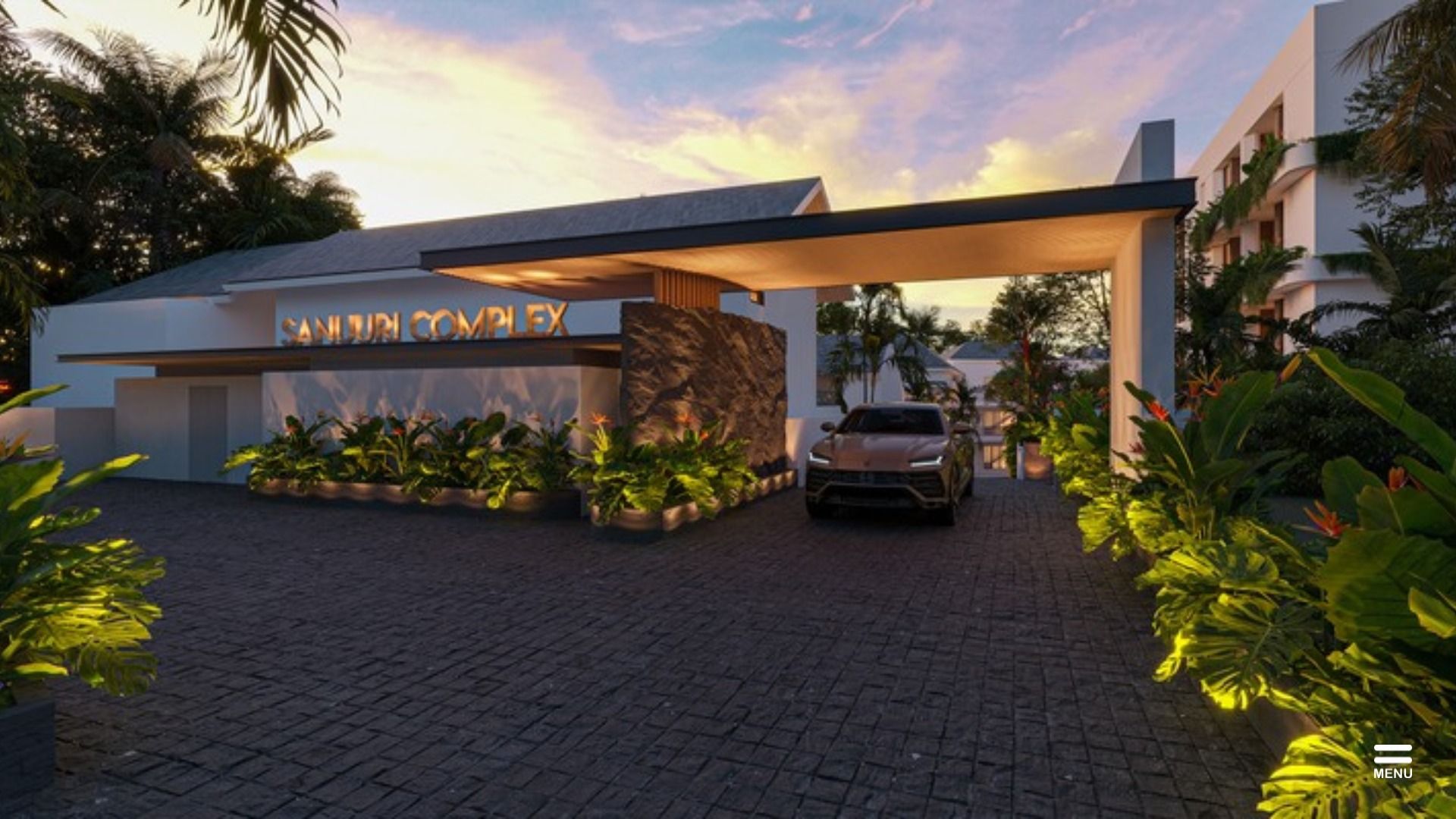
Bali offers Japanese and Korean investors what home markets no longer do: hard-asset entry from roughly USD 175,000, advertised gross yields several times Tokyo or Seoul levels, and a seven-hour direct flight. Ownership runs through leasehold, Hak Pakai or a PT PMA company, since foreigners cannot hold Indonesian freehold.
Key takeaways
- Sanur leasehold entries started around USD 175,000 in July 2026 listings; freehold-grade villas near the beach ran USD 300,000 to 800,000.
- Agents advertise 7 to 10 per cent gross yields for well-located Sanur villas. Model net; it is still a different universe from compressed Tokyo and Seoul residential yields.
- Legal routes: leasehold (no visa needed), Hak Pakai with a KITAS, or a PT PMA company holding HGB for rental businesses. Nominee structures are illegal.
- Non-residents pay 20 per cent withholding on gross rent per PwC; Indonesia has tax treaties with both Japan and South Korea.
- Sanur is the island's infrastructure story: a USD 620 million health economic zone and a new international hospital, per Government Regulation 41 of 2022.
Why would a Japanese or Korean investor look at Bali now?
Because the trip is short, the entry price is low in absolute terms, and the income profile is the opposite of what domestic residential offers. Tokyo and Seoul apartments are capital-growth stories with thin rental yields; Bali is a cash-flow story priced in a tourism economy that keeps growing.
Bali received 6.9 million foreign arrivals in 2025, up 9.7 per cent on 6.33 million in 2024, according to BPS Bali, the province's statistics agency. For yen-based investors, years of currency weakness have made overseas assets expensive, which is exactly why the low absolute entry point matters: a complete income-producing property in Bali requires less capital than a studio apartment in central Tokyo. For Korean investors, the jeonse deposit system and heavy domestic regulation compress achievable rental returns at home, while Bali rents are earned in a USD-linked holiday and long-stay market. Seoul and Tokyo are also only one hour ahead of Bali time, so owning here never means managing across an awkward time gap. Bali has been a familiar destination for Japanese honeymooners and Korean holidaymakers since the 1990s; the new step is owning the asset rather than renting the room.
What does the entry price mean in yen and won terms?
At a high level, a Sanur leasehold starts at the price of a compact provincial apartment at home and tops out below the cost of a central one-bedroom in Tokyo or Seoul. Sanur leasehold entries began around USD 175,000 in July 2026 listings, with beach-adjacent freehold villas at USD 300,000 to 800,000.
We do not quote yen or won conversions here because exchange rates move faster than articles update. The structural comparison is what counts: at any plausible rate, the capital that buys a single compact flat in Minato-ku or Gangnam buys a furnished pool villa in Sanur with money left for a decade of running costs. Most foreign-facing Bali projects market with USD-linked pricing, so a currency view on the dollar is part of the decision for JPY and KRW based buyers, and hedging or staged payments can manage it.
| Factor | Tokyo apartment | Seoul apartment | Sanur leasehold |
|---|---|---|---|
| Investment thesis | Capital preservation, thin yield | Price cycles, jeonse-compressed yield | Cash flow from tourism and long-stay tenants |
| Gross yield profile | Low single digits | Low single digits | Agents advertise 7-10%; model net with caution |
| Entry capital | High per square metre | High per square metre | From ~USD 175,000 (July 2026 listings) |
| Currency of income | JPY | KRW | IDR, commonly USD-linked pricing |
| Flight from home | ~7 hours direct | ~7 hours direct | n/a |
How can Japanese and Korean buyers legally own Bali property?
Three routes exist, and only three. Leasehold (Hak Sewa) is the standard: a long contractual right, no visa or local company required. Hak Pakai title suits individuals holding an Indonesian KITAS or KITAP residence permit. A PT PMA foreign-owned company holding HGB title suits buyers running a genuine rental business.
Foreigners cannot hold Indonesian freehold (Hak Milik), and nominee arrangements, where an Indonesian citizen holds title on your behalf, are illegal and unenforceable. This is worth stating bluntly because nominee structures are still marketed to Asian buyers. Typical Sanur leasehold terms run 25 to 30 years with negotiated extension options; Sanuuri Residences in Sanur is sold on a 50-year leasehold, materially longer than the local norm. Corporate buyers used to Japanese GK or Korean corporate wrappers should note the PT PMA is the Indonesian equivalent for property operations, with HGB control running up to roughly 80 years. The plain-language comparison sits in leasehold versus freehold in Bali, and the full process, from reservation to keys, in the complete foreigner's guide to buying property in Bali.
What income, tax and management should you expect?
Expect honest gross-to-net arithmetic rather than brochure numbers. Agents advertise 7 to 10 per cent gross yields for well-located Sanur villas; treat gross figures with caution and model net after management, maintenance, voids and tax. Non-residents pay a 20 per cent final withholding tax on gross rental income, per PwC's Indonesia tax summaries.
Indonesia holds double tax treaties with both Japan and South Korea, which can affect the final position, and home-country reporting obligations continue regardless. Owners who become Indonesian tax residents by spending 183 or more days in country pay a 10 per cent final tax on gross rent instead. Annual land and building tax (PBB) is small in practice, effectively 0.1 to 0.3 per cent of assessed value. Distance makes professional management non-negotiable; at Sanuuri, short and long term rental management is handled in-house by Investland Bali, with owners receiving reporting remotely. Moving income home is a documentation exercise rather than an obstacle, explained in currency, banking and repatriating rental income from Bali.
Why do regional investors keep landing on Sanur specifically?
Because Sanur is the part of Bali where the Indonesian government is spending real money. KEK Sanur, the country's first health special economic zone, covers 41.26 hectares with around USD 620 million of projected investment under Government Regulation 41 of 2022, and the Bali International Hospital inside it opened on 25 June 2025.
That anchors exactly the tenant base a conservative investor wants: medical professionals, health travellers, families and retirees on long stays, rather than a purely seasonal party crowd. Sanur itself is a calm, established beach town with a 7 kilometre car-free promenade, a harbour serving the Nusa Penida fast boats, and international schooling nearby. It behaves like a residential market with a tourism dividend, which is the profile Japanese and Korean capital tends to prefer over hype-driven surf towns. The same logic applies to Singapore and Hong Kong money, covered in Bali property for Singapore and Hong Kong investors, and the numbers behind the district are in the Sanur property investment guide for 2026.
Frequently asked questions
Can Japanese and Korean citizens buy property in Bali?
Yes. Foreigners of any nationality can hold Bali property through leasehold (Hak Sewa), through Hak Pakai title if they hold an Indonesian KITAS or KITAP residence permit, or through a PT PMA foreign-owned company holding HGB title for rental businesses. Freehold (Hak Milik) is reserved for Indonesian citizens, and nominee arrangements are illegal and unenforceable.
How long is the flight from Tokyo or Seoul to Bali?
Around seven hours direct. Garuda Indonesia serves Tokyo, and Korean Air and Garuda serve Seoul Incheon, alongside one-stop options through Jakarta and Singapore. Bali sits in a similar time zone band to Japan and Korea, one hour behind Tokyo and Seoul, so managing a property does not mean working across a night-and-day gap.
What tax do Japanese or Korean owners pay on Bali rental income?
Non-residents of Indonesia pay a 20 per cent final withholding tax on gross rental income, per PwC's Indonesia tax summaries. Indonesia has double tax treaties with both Japan and South Korea, which can affect the final position, and home-country reporting still applies. Owners who become Indonesian tax residents pay a 10 per cent final tax on gross rent instead.
Do I need to visit Bali to buy?
Not necessarily. Reputable developers support remote purchases with 3D walkthroughs, video inspections, power-of-attorney signing through a notaris, and staged payments. Sanuuri Residences, for example, publishes full 3D tours at tours.sanuuri.com. Most buyers still visit once before completion, which the short flight makes practical.
Sources
- BPS Bali (Badan Pusat Statistik), foreign arrivals data, 2025
- PwC Indonesia tax summaries, withholding and property taxation, 2026
- Government Regulation 41 of 2022 establishing KEK Sanur
- Sanur property listings survey, July 2026