
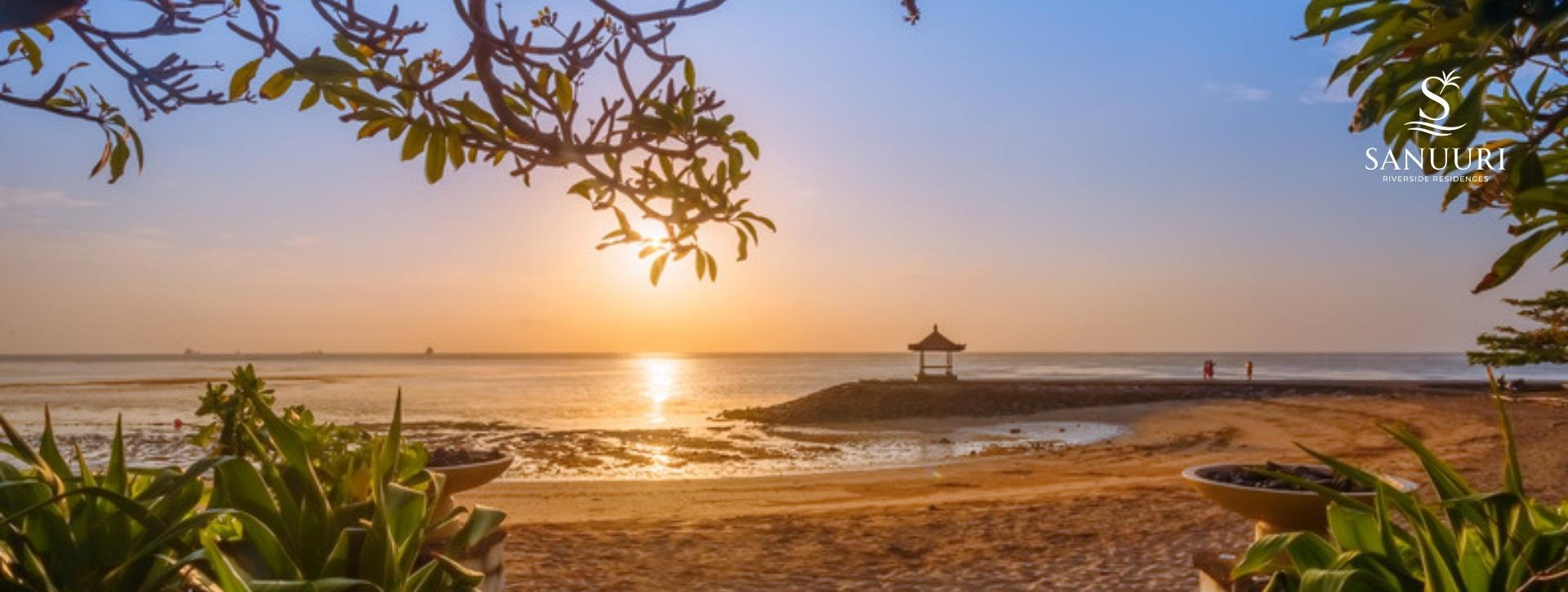
Sanur is called Bali's most liveable town because the everyday fundamentals are unusually strong: a flat, car-free beach promenade of roughly 7 km, Bali International Hospital eight minutes away, a genuine town centre, fast-boat links from Sanur Harbour, and a calmer pace than Canggu or Seminyak. The label is earned by infrastructure, not marketing.
Key takeaways
- Sanur's 7 km beachfront promenade is flat and car-free, unique on Bali's coast.
- Bali International Hospital opened in Sanur on 25 June 2025, inside Indonesia's first health special economic zone.
- KEK Sanur covers 41.26 hectares with roughly USD 620 million in projected investment, per Government Regulation 41 of 2022.
- A retired couple lives comfortably on roughly USD 2,350 to 3,450 a month, according to bali.com's 2026 guide.
- The honest trade: Sanur gives up nightlife and surf culture in exchange for ease.
What actually makes a town liveable in Bali?
Liveability in Bali comes down to five practical tests: can you walk anywhere safely, how far is a serious hospital, is there a real community beyond tourism, how bad is the traffic, and can you sleep at night. Sanur scores well on all five, which is why the label keeps sticking to it rather than to flashier neighbours.
Most coverage of Bali ranks places by beach clubs and photo opportunities. People who actually live on the island weigh duller things: the school run, the pharmacy, the price of a taxi at 9pm, the noise level at midnight. Sanur was a real town long before tourism, a fishing village that drew painters like the Belgian Adrien-Jean Le Mayeur in the 1930s, and it still functions as one. It has supermarkets, banks, notaries, Bali Island School, a working harbour and a resident population that includes Balinese families, long-settled Europeans and Australians, and a growing medical workforce. Our complete Sanur area guide walks through the town street by street.
How walkable is Sanur compared with the rest of Bali?
Sanur is the most walkable coastal town in Bali. Its beachfront promenade runs roughly 7 km from Matahari Terbit in the north to Mertasari in the south with no cars or scooters, and the streets behind it are flat. No other Bali neighbourhood lets a resident manage errands, daily exercise and a beach walk without a vehicle.
That flatness matters more than it sounds. Canggu's shortcuts funnel scooters through narrow lanes, Uluwatu's cliffs make every trip a drive, and Ubud's pavements come and go. In Sanur, the promenade doubles as the town's main artery: walkers and cyclists at 6am, families in the afternoon, diners drifting between beachfront warungs at dusk. Jalan Danau Tamblingan, the main street running parallel one block inland, carries most of the shops, galleries and restaurants at an equally unhurried pace. We cover routes and etiquette in our guide to the beach promenade, and non-riders can read how to get around Sanur without a scooter.
Connectivity beyond the town holds up too. Sanur Harbour runs fast boats to Nusa Penida and Lembongan from the northern end of the beach, Ngurah Rai airport is roughly 25 minutes away, and Icon Mall sits about ten minutes from the centre for anything the local supermarkets cannot supply. Few places on the island combine that reach with streets you can actually walk.
What has the KEK Sanur health zone changed?
KEK Sanur, Indonesia's first health special economic zone, placed a 41.26-hectare medical and hospitality district on the northern edge of town, anchored by Bali International Hospital, which opened on 25 June 2025. For residents, it moved serious hospital care from a cross-town drive to roughly eight minutes away.
The zone was established under Government Regulation 41 of 2022 with around USD 620 million in projected investment, and the hospital was inaugurated by President Prabowo. The national aim is to keep some of the estimated billions Indonesians spend on treatment in Singapore, Penang and Bangkok onshore. The local effect is simpler: Sanur now has hospital infrastructure that no comparable Bali town can match, alongside the established options of BIMC and the JCI-accredited Siloam Hospital Bali further south and west. For a resident in their sixties or seventies, that single fact often decides the whole location question. We unpack the zone's ambitions and what is being built in our piece on the Bali International Hospital and the Sanur health zone.
How does Sanur compare with Canggu, Seminyak and Ubud day to day?
Sanur trades excitement for ease. Canggu has the better cafe and nightlife scene, Seminyak the denser dining, Ubud the culture and greenery. Sanur has the flat streets, the promenade, the hospital, the harbour and the quiet nights, which is a different, more residential set of wins.
| Measure | Sanur | Canggu | Seminyak | Ubud |
|---|---|---|---|---|
| Terrain and walkability | Flat, 7 km car-free promenade | Flat but scooter-dominated lanes | Flat, busy pavements | Hilly, patchy pavements |
| Traffic pressure | Moderate, worst on the bypass | Heavy at shortcuts and peak hours | Heavy most of the day | Heavy in the centre |
| Noise after 10pm | Low | High near venues | High | Low to moderate |
| Nearest major hospital | Bali International Hospital, ~8 min | BIMC or Siloam, 30 to 60 min in traffic | Siloam Kuta, 20 to 40 min | Regional clinics; Denpasar ~1 hr |
| Dominant crowd | Residents, families, over-50s | Digital nomads, 20s and 30s | Holidaymakers | Wellness visitors, creatives |
| Best for | Full-time living | Social scene and surf | Short stays and dining | Culture and retreats |
The comparison is not one-sided, and pretending otherwise would be dishonest. If your priority is a social scene at 30, Canggu is the rational pick. The full buying angle is covered in Sanur vs Canggu: where should you buy in 2026.
Is Sanur expensive to live in?
No. A retired couple lives comfortably in Sanur on roughly USD 2,350 to 3,450 a month according to bali.com's 2026 cost-of-living guide, with a premium lifestyle running USD 4,000 to 6,000. That covers housing, dining out several times a week, transport and help at home.
Bali's overall demand keeps rising, which supports services rather than inflating them beyond reach: the island received 6.9 million foreign arrivals in 2025, up 9.7 percent on 2024, according to BPS Bali, with Australians the largest group at roughly 1.63 million. Sanur absorbs its share of that growth gently. Prices at beachfront restaurants run higher than at warungs two streets back, as anywhere, but the town has kept a working local economy alongside the visitor one.
Who finds Sanur too quiet?
Surfers, night owls and most people under 35. The reef break is gentle and seasonal, bars wind down early, and the energy that draws the TikTok crowd to Canggu simply is not here. Sanur's calm is a feature for residents and a bug for visitors chasing intensity.
This is the honest core of the liveable town label. Sanur is not trying to win the holiday economy; it is winning the residency economy. The demographics skew older, the mornings start earlier, and the town rewards routines: promenade walks, market runs, long lunches, early dinners. If that reads as dull, Sanur is not your town. If it reads as the point, you are the person the town was quietly built for, and our piece on why Sanur suits retirees better than anywhere else in Bali takes the argument further.
Frequently asked questions
Is Sanur better for living than Canggu?
For full-time living, Sanur usually wins on the practical measures: flat walkable streets, lighter traffic, quieter nights and an international hospital eight minutes from the centre. Canggu wins on nightlife, surf and the cafe scene. Residents tend to choose Sanur; visitors in their twenties tend to choose Canggu.
How far is Bali International Hospital from central Sanur?
Bali International Hospital sits inside the KEK Sanur health zone on the northern edge of town, roughly an eight-minute drive from central Sanur. It opened on 25 June 2025 and was inaugurated by President Prabowo. No other Bali neighbourhood has a hospital of this scale within ten minutes.
Can you live in Sanur without a car or scooter?
Yes, more easily than anywhere else on the coast. The town is flat, the beach promenade runs roughly 7 km without vehicles, and supermarkets, clinics, restaurants and the harbour are all within walking or cycling distance. Grab and Gojek cover the trips that need wheels.
Is Sanur only for retirees?
No, though it does skew older than Canggu or Uluwatu. Families choose it for Bali Island School and the calm beach, medical professionals work in the KEK Sanur zone, and long-stay visitors of every age use it as a quiet base. What it lacks is a late-night scene, which is precisely why residents pick it.
Sources
- BPS Bali, foreign arrivals statistics for 2025, published 2026
- Government Regulation 41 of 2022 establishing KEK Sanur
- Presidential inauguration of Bali International Hospital, 25 June 2025
- bali.com, cost of living in Bali guide, 2026