
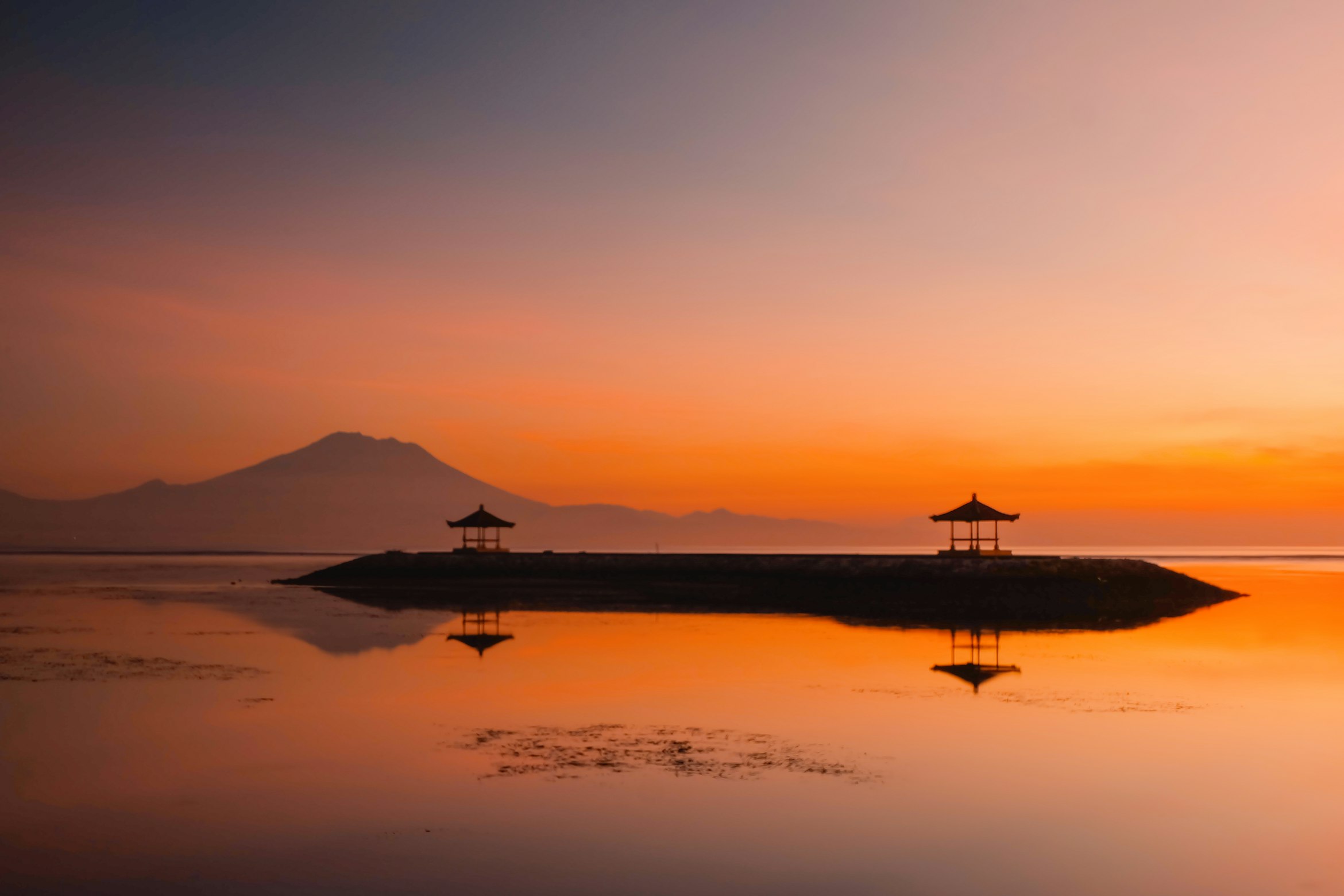
European retirees choose Sanur over Canggu because it is flat, walkable and quiet, with a 7 km car-free beach promenade, an international hospital that opened in 2025 and a settled older expat community. Canggu suits younger digital nomads: livelier nightlife and surf, but heavier traffic, construction noise and constant social churn.
Key takeaways
- Sanur's population of long-stay foreigners skews 50-plus and European; Canggu's skews 25-35 and transient.
- The 7 km car-free promenade means Sanur residents walk and cycle daily without touching a road.
- Bali International Hospital opened in Sanur on 25 June 2025, inside Indonesia's first health special economic zone.
- Canggu genuinely wins on nightlife, surf and café culture. It loses on noise, traffic and turnover.
- A retired couple lives comfortably in Sanur on roughly USD 2,350 to 3,450 a month, per bali.com's 2026 guide.
Why do European retirees settle in Sanur rather than Canggu?
Because the two towns are built around different lives. Sanur is a residential seaside town with flat streets, a protected reef lagoon and neighbours who stay for years. Canggu is a fast-growing hotspot built around surf, gyms and laptops, where the average resident is under 35 and moves on within a year or two.
Neither is wrong. But a 65-year-old from Utrecht or Hamburg is optimising for different things than a 28-year-old freelancer: proximity to a good hospital, streets you can walk at night, a GP who knows your name, and a community that is still there next Christmas. On every one of those measures Sanur wins, which is why it has quietly accumulated one of Bali's oldest European expat populations. Our broader piece on why Sanur is Bali's best area for retirees makes the general case; this article is about the Sanur-versus-Canggu choice specifically.
What does the demographic difference actually look like?
Sanur's foreign community is dominated by retirees and older long-stay residents, with Dutch, German, British and Scandinavian names filling the community notice boards. Canggu's is dominated by digital nomads and content creators in their twenties and thirties, most on short visas.
The difference compounds socially. In Sanur, the person you meet at a walking group in January is still living there the following January, so friendships accumulate. In Canggu the churn resets social circles every few months. Bali as a whole received 6.9 million foreign arrivals in 2025, up 9.7% on 2024, according to BPS Bali, and the growth pools differently: Canggu absorbs the short-stay wave, Sanur the settlers. The practical entry points, from Rotary to bridge nights to beach clean-ups, are mapped in our guide to Sanur's expat community, clubs and activities. Dutch retirees in particular find an unusual depth of history here; Sanur has drawn European painters and long-stayers since the 1930s.
How do daily life and mobility compare?
Sanur is flat and walkable end to end, anchored by a roughly 7 km car-free beach promenade that residents use for morning walks and cycling. Canggu is a patchwork of narrow lanes shared with scooters and construction trucks, and most errands require riding or driving.
This is the single most underrated difference for anyone over 60. In Sanur you can live well without ever sitting on a scooter: the promenade links the whole seafront, pavements connect the main streets, and Grab and Gojek cover everything else. Canggu's famous shortcut traffic is not a joke locals tell; it shapes every plan you make after 3pm. The sea differs too. Sanur's reef-protected lagoon is calm and swimmable at most tides, suited to daily swims rather than surf sessions. Canggu's waves are the point for surfers and a hazard for everyone else.
The shape of a normal week differs accordingly. A Sanur week is built on repeatable routines: the same 6.30am stretch of promenade, a swim in the lagoon, coffee at a regular café on Jalan Danau Tamblingan, the market, bridge or Rotary midweek, dinner somewhere quiet. A Canggu week is built on novelty: new openings, new classes, new faces. Errands tell the same story. In Sanur the supermarket, the pharmacy, the bank and Icon Mall are all a short, flat hop apart, and a Grab car arrives in minutes on roads that actually move. In Canggu a 3 km errand can take half an hour on a scooter through lanes with no pavements, which is precisely the kind of daily friction that decides where people in their sixties stay long term.
What about healthcare?
Sanur now has the strongest healthcare story on the island. Bali International Hospital opened in Sanur on 25 June 2025, inaugurated by President Prabowo, inside KEK Sanur, Indonesia's first health special economic zone. Canggu has clinics for everyday needs but no comparable hospital nearby.
KEK Sanur covers 41.26 hectares with around USD 620 million in projected investment under Government Regulation 41 of 2022, a state-level bet on Sanur as Indonesia's medical tourism hub. For residents it means specialist care minutes from home rather than a cross-city drive: from Sanuuri Residences the new hospital is about eight minutes away. BIMC and the JCI-accredited Siloam Hospital Bali remain within reach in the island's south. The full landscape, including clinics and pharmacies, is covered in our guide to healthcare in Sanur. For older Europeans this is usually the deciding factor, and it is honestly one Canggu cannot match today.
| Factor | Sanur | Canggu |
|---|---|---|
| Typical foreign resident | 50-plus, settled, European | 25-35, digital nomad, transient |
| Terrain and walkability | Flat, 7 km car-free promenade | Narrow lanes, scooter-dependent |
| Hospital access | Bali International Hospital in town (opened June 2025) | Clinics only, hospitals a drive away |
| Sea | Calm reef lagoon, daily swimming | Surf breaks, strong currents |
| Noise and traffic | Low, residential rhythm | High, construction and shortcut traffic |
| Evenings | Dinner, live music, early nights | Beach clubs, DJs, late nights |
| Best suited to | Retirees, long-stay residents | Nomads, surfers, under-40 crowd |
Where does Canggu win?
Canggu beats Sanur on nightlife, surf, gym culture and the sheer variety of its café scene. If those four things top your list, you should be looking at Canggu, and no amount of promenade will change that.
It also runs younger in energy in ways some retirees genuinely enjoy: more new restaurant openings, more events, more of the island's creative economy. The honest framing is that Canggu is a brilliant place to visit from Sanur, about 45 minutes to an hour away off-peak, and a tiring place to be 68 in. Retirees who choose Canggu for the buzz tend to relocate within a couple of years; the ones who choose Sanur tend to stay. The full buyer-focused breakdown, including prices and rental profiles, is in our comparison of Sanur vs Canggu as places to buy in 2026.
What does this mean if you are choosing where to buy?
Buy where your daily life will actually happen. For most European retirees that points to Sanur: the demand for homes there comes from people like you, staying for years, which also makes the rental market steadier than Canggu's short-let churn.
Money goes a sensible distance. A retired couple lives comfortably in Sanur on roughly USD 2,350 to 3,450 a month, around EUR 2,000 to 3,000, according to bali.com's 2026 cost-of-living guide, and the long-stay tenant pool now includes staff and patients drawn by the hospital zone. Sanuuri Residences sits a two-minute walk from the beach and promenade, with apartments, lofts and pool villas handed over fully furnished on a 50-year leasehold, materially longer than the 25 to 30 years typical in Sanur. The gym, sauna, shared pool and concierge lobby are designed precisely for the settled, walk-everywhere life this article describes. If you want to test the premise before committing, the 3D walkthroughs at tours.sanuuri.com let you inspect every residence type from a European sofa, and a wet-season visit in January will show you Sanur at its least flattering, which is still a town most retirees recognise as home within a week.
Frequently asked questions
Is Sanur boring compared with Canggu?
It is quieter, deliberately so. Sanur has restaurants, beach bars, a cinema at Icon Mall and a full events calendar, but evenings wind down early. If your definition of a good night involves DJs and beach clubs, Canggu is the better fit. Most retirees stop finding that a loss.
Are there many European retirees already living in Sanur?
Yes. Sanur has hosted an older European expat community for decades, with Dutch, German, British and Scandinavian residents well represented. Walking groups, Rotary and volunteer organisations make it straightforward to meet people within weeks of arriving.
Which is better for property investment, Sanur or Canggu?
They are different bets. Canggu offers higher short-let turnover but more supply risk and noise, while Sanur offers steadier long-stay demand from retirees and, since 2025, staff and patients connected to the new hospital zone. Agents advertise 7 to 10% gross yields for well-located Sanur villas; treat gross figures with caution and model net.
How far is Sanur from Canggu if I want both?
They sit on opposite sides of Denpasar. Off-peak the drive takes about 45 minutes to an hour, and longer in traffic. Living in Sanur and visiting Canggu occasionally is easy; commuting between them daily is not something residents recommend.
Sources
- BPS Bali, foreign arrivals statistics, 2025
- Government Regulation 41 of 2022 on KEK Sanur (health special economic zone)
- Presidential inauguration of Bali International Hospital, Sanur, 25 June 2025
- bali.com, Cost of Living in Bali guide, 2026