
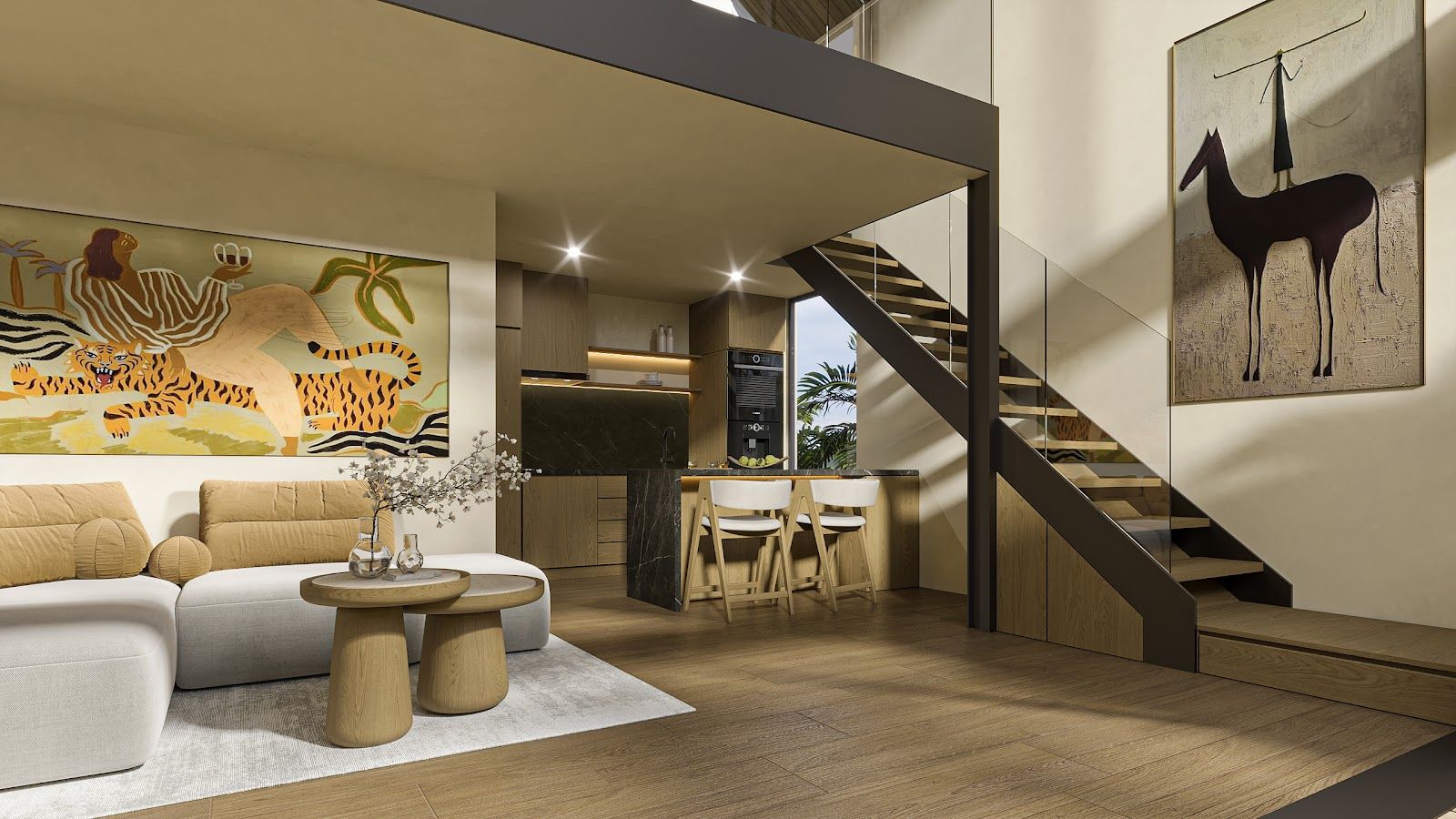
Splitting the year between Australia and Bali is the retirement model that keeps everything: Medicare, pension access, grandchildren, and a tropical winter. The usual pattern is the Australian winter in Sanur, May to October, matching Bali's dry season. It works best with the right visa, a stay under 183 days, and a lock-up-and-leave home.
Key takeaways
- Bali's dry season (roughly April to October) lines up almost perfectly with Australia's winter, so the six-month split follows the weather.
- Visit visas with extensions cover shorter stays; the E33F Retirement KITAS (60+) or E33 Second Home Visa suit committed part-year residents.
- The Age Pension is generally portable, but supplements can change after 6 weeks abroad and rates can be recalculated after 26 weeks, per Services Australia.
- Staying under 183 days in Indonesia usually keeps you an Australian tax resident only. Cross it and Indonesian tax residency can follow.
- A managed complex solves the empty-house problem: no mould, no staff to supervise, and rental income while you are back in Australia.
How does a part-year retirement between Australia and Bali work?
The standard rhythm is six months in each place, timed to the seasons. Bali's dry season runs roughly April to October, which is exactly the stretch when Melbourne, Adelaide and Hobart are at their coldest, so retirees fly north in autumn and come home for the Australian summer, Christmas and the grandchildren. The reverse split works too for those who prefer Bali's quieter, greener wet season.
The appeal is that you give up almost nothing. You remain an Australian resident, keep Medicare and your GP, keep your pension arrangements, and simply relocate the worst half of the weather. The flight is six-odd hours from the east coast and shorter from Perth, close enough for family emergencies. You are not alone in the idea: BPS Bali counted around 1.63 million Australian arrivals in 2025, the island's largest source market, and a growing slice of them are over-60s staying for months rather than weeks.
Which visa suits a six-month-a-year retiree?
For stays of about two months, an ordinary visit visa with an extension is enough, though repeating it every year becomes tedious. For a committed five-to-six-month annual stay, the two purpose-built options are the E33F Retirement KITAS for those aged 60 and over, and the E33 Second Home Visa, which has no age limit but requires an IDR 2 billion (about USD 125,000) deposit in an Indonesian state-owned bank.
The E33F Retirement KITAS is a one-year, renewable permit applied for through evisa.imigrasi.go.id, with the official line requiring age 60 or over, proof of around USD 3,000 per month in pension or passive income, a bank statement balance of roughly USD 2,000, proof of accommodation, health insurance, and processing through a licensed visa agent. Requirements as applied by agents can vary, so confirm current practice. The E33 Second Home Visa runs 5 or 10 years, suits under-60s, and tolerates remote foreign work but no Indonesian-source income. Both are multiple-entry in practice, which is the feature a part-year retiree actually cares about.
| Option | Length | Age rule | Money test | Fits best |
|---|---|---|---|---|
| Visit visa plus extension | Roughly 60 days, extendable | None | None significant | Trial seasons and shorter winters |
| E33F Retirement KITAS | 1 year, renewable; KITAP possible after 3 to 4 years | 60+ (agents' practice can vary) | About USD 3,000/month pension or passive income | Over-60s returning every year |
| E33 Second Home Visa | 5 or 10 years | None | IDR 2 billion deposit in a state-owned bank | Under-60s and those wanting long certainty |
| E33E Silver Hair Visa | 5 years | 60+ | USD 50,000 deposit plus USD 3,000/month income | Over-60s who prefer one long permit over renewals |
What happens to your Age Pension and Medicare?
For most part-year retirees, not much. The Age Pension is generally portable overseas, but according to Services Australia the Pension Supplement reduces after six weeks abroad, and once you have been outside Australia for 26 weeks your rate can be recalculated against your Australian Working Life Residence. A retiree who returns within six months typically avoids the harshest adjustments.
Medicare does not cover treatment in Indonesia at all, so your Bali months need travel or expat health insurance regardless of how healthy you feel. Your enrolment itself continues while you remain an Australian resident who returns regularly. Sanur softens the healthcare worry in any case: Bali International Hospital, inaugurated in June 2025, is around eight minutes from Sanuuri Residences. The detailed pension mechanics are covered in our guide to the Age Pension while living in Bali, and every figure here should be confirmed with Services Australia for your own file.
What does splitting the year mean for tax?
The headline rule is the 183-day test. Spend 183 days or more in Indonesia in a 12-month period and you generally become an Indonesian tax resident under Indonesian tax law, taxed on worldwide income subject to treaty relief. Stay under it, keep your Australian home and ties, and you normally remain an Australian tax resident only.
This is why the classic split is "just under six months" in Bali rather than just over. There is a happy side effect for landlords, though: Indonesian tax residents pay a 10 per cent final tax on gross rental income against 20 per cent withholding for non-residents, per PwC's Indonesia tax summaries, so the sums differ depending on which side of the line you sit. The full picture, including what the Australia-Indonesia treaty does, is in our explainer on tax for Australian retirees in Bali.
What kind of home works when it sits empty half the year?
A lock-up-and-leave one. A standalone villa left empty through Bali's humid wet season is a project: mould, gardens, pool chemistry, staff wages and security do not pause because you flew home. A managed complex hands all of that to an on-site team, which is why part-year residents overwhelmingly prefer the format.
The better complexes also turn the empty months into income. At Sanuuri Residences in Sanur, a two-minute walk from the beach and promenade, Investland Bali runs short and long-term rental management in-house, so owners can occupy their apartment, loft or pool villa from May to October and hand the keys back for the Australian summer. Every residence is handed over fully furnished on a 50-year leasehold, and the shared pool, gym, sauna and concierge keep running even when your side of the door is locked. The practical case for the format is laid out in our lock-up-and-leave guide, and the income side in how owners rent out their Sanur home while away.
What does the Bali half of the year cost?
Less than the Australian half, usually by a wide margin. A retired couple in Sanur lives comfortably on roughly USD 2,350 to 3,450 per month according to bali.com's 2026 cost-of-living guide, around AUD 3,600 to 5,300, covering housing, food, transport and help at home. Premium lifestyles run USD 4,000 to 6,000.
Owners who rent out their home for the other six months offset costs further, subject to the tax rates above. The honest caveats: two households always cost more than one, flights add up, and health insurance premiums rise with age. Run the numbers over a full year, not a holiday fortnight, before you commit.
Frequently asked questions
Do I lose the Age Pension if I spend six months a year in Bali?
Not automatically. The Age Pension is generally portable, but supplements can reduce after six weeks abroad and, after 26 weeks outside Australia, your rate may be recalculated based on your Australian Working Life Residence. Part-year retirees who return regularly usually keep their pension, but confirm your own position with Services Australia before committing.
Can I rent out my Bali home while I am back in Australia?
Yes, and many part-year owners do exactly that to cover running costs. Rental income earned by non-residents faces a 20 per cent final withholding tax on gross rent under Indonesian tax law, so model returns net of tax and management fees. A complex with in-house rental management makes the switch between owner use and guest rental straightforward.
Do I need the Second Home Visa's IDR 2 billion deposit to live part-year in Bali?
No. The E33 Second Home Visa and its IDR 2 billion deposit suit people who want 5 or 10 years of residence certainty, but a part-year retiree can also use the E33F Retirement KITAS from age 60, or ordinary visit visas with extensions for stays of a few months. Match the visa to your calendar, not the other way around.
Does six months in Bali make me an Indonesian tax resident?
It can. Spending 183 days or more in Indonesia within a 12-month period generally makes you an Indonesian tax resident under Indonesian tax law. Many part-year retirees deliberately keep their Bali stay just under that threshold. Take advice on both the Australian and Indonesian side before settling your calendar.
Sources
- Services Australia, Age Pension portability rules, servicesaustralia.gov.au, 2026
- Directorate General of Immigration, Republic of Indonesia, evisa.imigrasi.go.id, 2026
- PwC, Indonesia tax summaries, 2026
- BPS Bali (Statistics Indonesia, Bali Province), foreign visitor arrivals, 2025
- bali.com, cost of living guide, 2026