
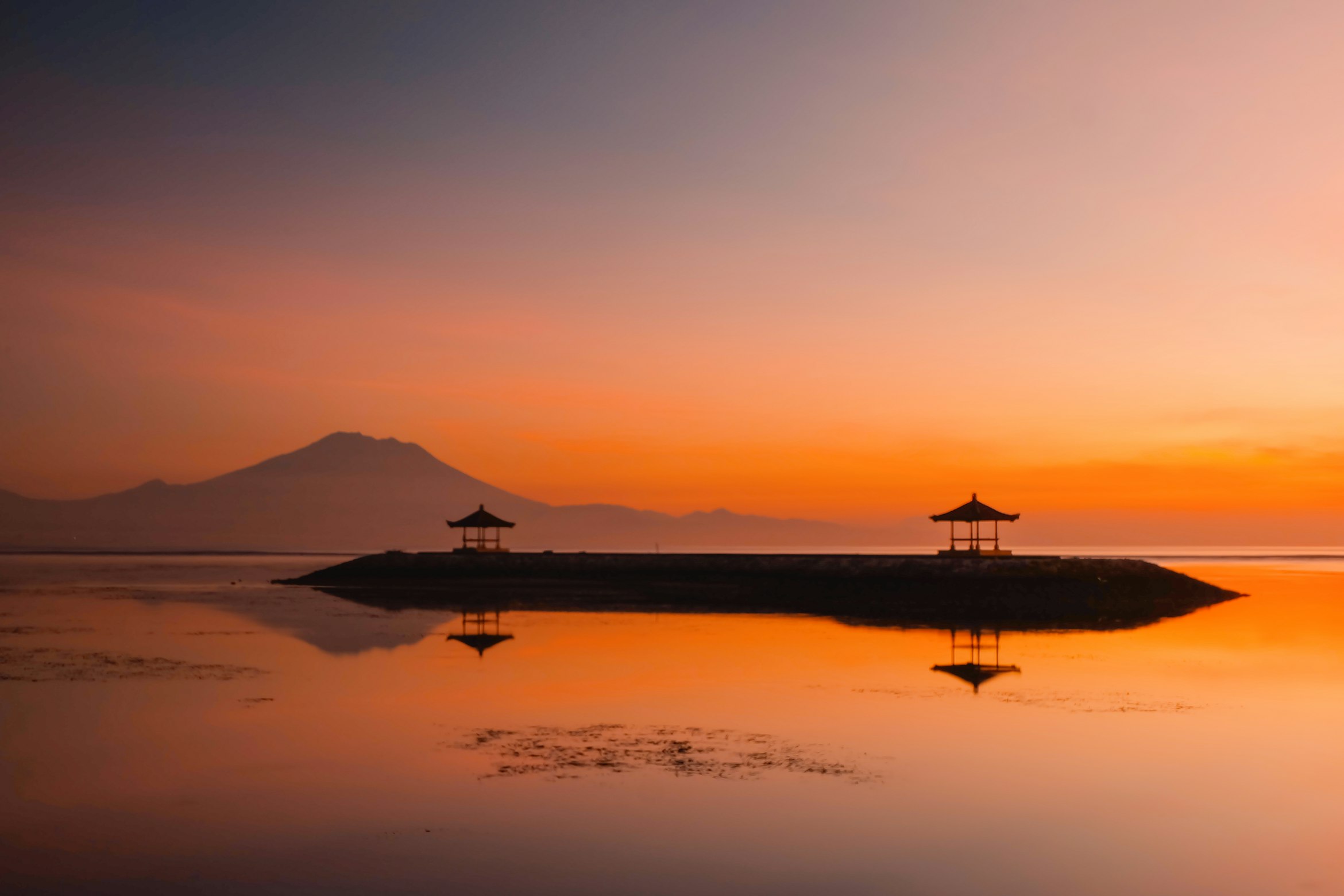
East coast Bali and south Bali function as two different islands for residents. The east, from Sanur up to Candidasa and Amed, offers calm reef-protected sea, sunrise mornings and an older, settled crowd. The south, from Kuta to Canggu and Uluwatu, offers surf, nightlife and shopping, paid for in traffic and noise.
Key takeaways
- The east is the sunrise coast: calm sea behind fringing reef, early mornings, older residents, slower pace.
- The south is Bali's tourism engine: surf beaches, beach clubs, malls, the airport, and most of the island's 6.9 million 2025 arrivals (per BPS Bali).
- Sanur is the east's anchor town, with a 7 km car-free promenade and Bali International Hospital, open since 25 June 2025.
- Living costs are broadly lower in the east, with Sanur the priced exception.
- Choose by rhythm: sunrise walkers go east, sunset partiers go south.
What actually separates east Bali from south Bali?
Geography first, then culture. The east coast faces the sunrise across the Badung Strait towards Nusa Penida, runs from Sanur north-east through Padangbai and Candidasa to the diving villages of Amed, and sits under the shadow of Mount Agung, Bali's holiest volcano. The south occupies the island's busy foot: Kuta, Legian and Seminyak on the west-facing surf coast, Canggu beyond them, Jimbaran and the Uluwatu cliffs on the Bukit Peninsula, and the Nusa Dua resort enclave.
Culture follows the coastline. West-facing southern beaches take open Indian Ocean swell, which built a surf, beach-club and nightlife economy aimed at visitors. The east's reef-protected shallows built something quieter: fishing villages, morning swimmers, jukung boats, and towns where people live full-time rather than holiday.
Which coast has the better daily rhythm for residents?
It depends entirely on your hours. The east runs on mornings: sunrise over Nusa Penida, swims at first light, walks and cycling before the heat, quiet evenings. The south runs on afternoons and nights: surf sessions, long lunches, beach clubs at sunset, restaurants and bars late.
Sanur is the clearest expression of the eastern rhythm. Its roughly 7 km car-free beachfront promenade fills from 6am with walkers, joggers and cyclists, many of them residents in their sixties and seventies, and the town is largely quiet by 10pm. Residents also point out a wet-season perk of facing east: mornings often deliver the day's best weather, which suits the sunrise-coast routine; we cover what November to March genuinely looks like in our rainy season guide. The promenade itself gets a full walkthrough in the Sanur promenade guide.
How do services and infrastructure compare?
The south still holds the density advantage: Ngurah Rai International Airport, the biggest malls, the widest restaurant scene and the long-established BIMC and Siloam hospitals around Kuta and Nusa Dua. But the gap has narrowed dramatically at the east's southern end, because the Indonesian state placed its biggest health bet in Sanur.
Bali International Hospital opened in Sanur on 25 June 2025, inaugurated by President Prabowo, inside KEK Sanur, Indonesia's first health special economic zone: 41.26 hectares and around USD 620 million in projected investment under Government Regulation 41 of 2022. Sanur also has Sanur Harbour, the departure point for fast boats to Nusa Penida and Lembongan, plus supermarkets, international schooling at Bali Island School and a 25-minute run to the airport. Further north-east, honesty requires saying it plainly: Candidasa and Amed remain an hour or more from a major hospital, which is the main reason budget-conscious residents up there tend to be younger and healthier.
East vs south at a glance
| Factor | East coast (Sanur to Amed) | South (Kuta to Uluwatu, Nusa Dua) |
|---|---|---|
| Sea | Calm, reef-protected, swimmable daily | Open swell, surf beaches, currents |
| Rhythm | Mornings: sunrise, walks, early nights | Afternoons and nights: surf, clubs, dining |
| Resident profile | Older, settled, long-stay | Younger, transient, holiday-driven |
| Traffic and noise | Light outside Sanur's centre | Heavy congestion, nightlife noise |
| Healthcare | Bali International Hospital in Sanur; thin beyond Candidasa | BIMC and Siloam around Kuta and Nusa Dua |
| Cost of living | Lower overall; Sanur mid-range | Highest on the island in hotspots |
| Airport access | Sanur ~25 min; Amed 2.5+ hours | Mostly under an hour |
| Boat connections | Sanur Harbour to Nusa Penida and Lembongan | Benoa port, watersports at Tanjung Benoa |
How connected are the two coasts?
Better than the two-islands framing suggests, at the hinge point. Sanur connects to the south via the Ngurah Rai bypass and the Bali Mandara toll road across Benoa bay, putting the airport about 25 minutes away and Nusa Dua within roughly half an hour outside peak traffic. Living in Sanur does not mean giving up the south's assets; it means visiting them on your own terms and driving home to quiet.
The connection weakens fast as you travel north-east. Candidasa is around 90 minutes from the airport, Amed closer to three hours, and there is no rail and no meaningful public transport, so every trip is a car trip. That distance is precisely what buys the far east its silence and its prices, and it is why most residents treat the choice as three-way in practice: deep south for access, far east for escape, or Sanur as the compromise that keeps a foot on each coast.
What does each coast cost to live on?
The east is generally cheaper, with one exception: Sanur, whose infrastructure and popularity price it above its neighbours. As a benchmark, bali.com's 2026 guide puts a comfortable retired couple in Sanur at roughly USD 2,350 to 3,450 per month, with premium lifestyles at USD 4,000 to 6,000. Candidasa and Amed come in below that, mainly through cheaper housing, while southern hotspots like Seminyak and Canggu sit at the top of the island's cost range.
Demand pressure explains the trend line. BPS Bali recorded 6.9 million foreign arrivals in 2025, up 9.7% on 2024, with Australians the largest source market at roughly 1.63 million. Most of that volume lands in the south, which keeps southern rents and prices climbing; the east absorbs a quieter, longer-staying slice of it.
Housing follows the same gradient. Southern hotspot villas command the island's highest rates per square metre, driven by short-let investor demand. In Sanur, July 2026 listings show freehold villas near the beach at roughly USD 300,000 to 800,000 and leasehold entries from about USD 175,000, while the coast beyond Padangbai trades meaningfully below that. For residents rather than speculators, the east's pricing still tracks what homes are worth to live in, which is the healthier market to buy into.
So which island is yours?
Ask yourself one question: is your best hour of the day 6am or 6pm? Sunrise people, walkers, swimmers, early risers, people who want to know their neighbours, belong on the east coast. Sunset people, surfers, diners-out, nightlife lovers, belong in the south, and should read our Sanur vs Canggu comparison before assuming Canggu is the whole answer.
And if you want the east's calm without giving up hospitals, schools and an airport within half an hour, that compromise has a name: Sanur. Start with the full living in Sanur area guide to see how the town fits together, street by street.
Frequently asked questions
What counts as east Bali and what counts as south Bali?
The east, or sunrise coast, runs up from Sanur through Padangbai and Candidasa to Amed, with Sidemen inland beneath Mount Agung. The south covers the tourism engine room: Kuta, Legian, Seminyak, Canggu, Jimbaran, Nusa Dua and the Uluwatu clifftops of the Bukit Peninsula.
Is the sea calmer on Bali's east coast?
Generally yes. Much of the east coast, including Sanur, sits behind fringing reef, which keeps the water flat enough for daily swimming, paddleboarding and small jukung boats. The south's west-facing beaches take open Indian Ocean swell, which is exactly why surfers prefer them.
Which side of Bali is better for older residents?
The east coast suits most older residents better, and Sanur specifically combines flat walkable streets, a 7 km car-free promenade, an established retiree community and Bali International Hospital, open since June 2025. The south offers more nightlife and shopping at the cost of traffic and noise.
Is east Bali cheaper to live in than south Bali?
Broadly yes, with Sanur as the priced exception because of its infrastructure and popularity. Cost guides such as bali.com in 2026 put a comfortable retired couple in Sanur at roughly USD 2,350 to 3,450 per month, while quieter east coast towns like Candidasa and Amed come in lower, mainly through cheaper housing.
Sources
- BPS Bali (Badan Pusat Statistik Provinsi Bali), foreign arrivals data, 2025-2026
- Government Regulation 41 of 2022, KEK Sanur health special economic zone
- Bali International Hospital opening, 25 June 2025 (Presidential inauguration)
- bali.com cost of living guides, 2026
- Bali property listings survey, July 2026