
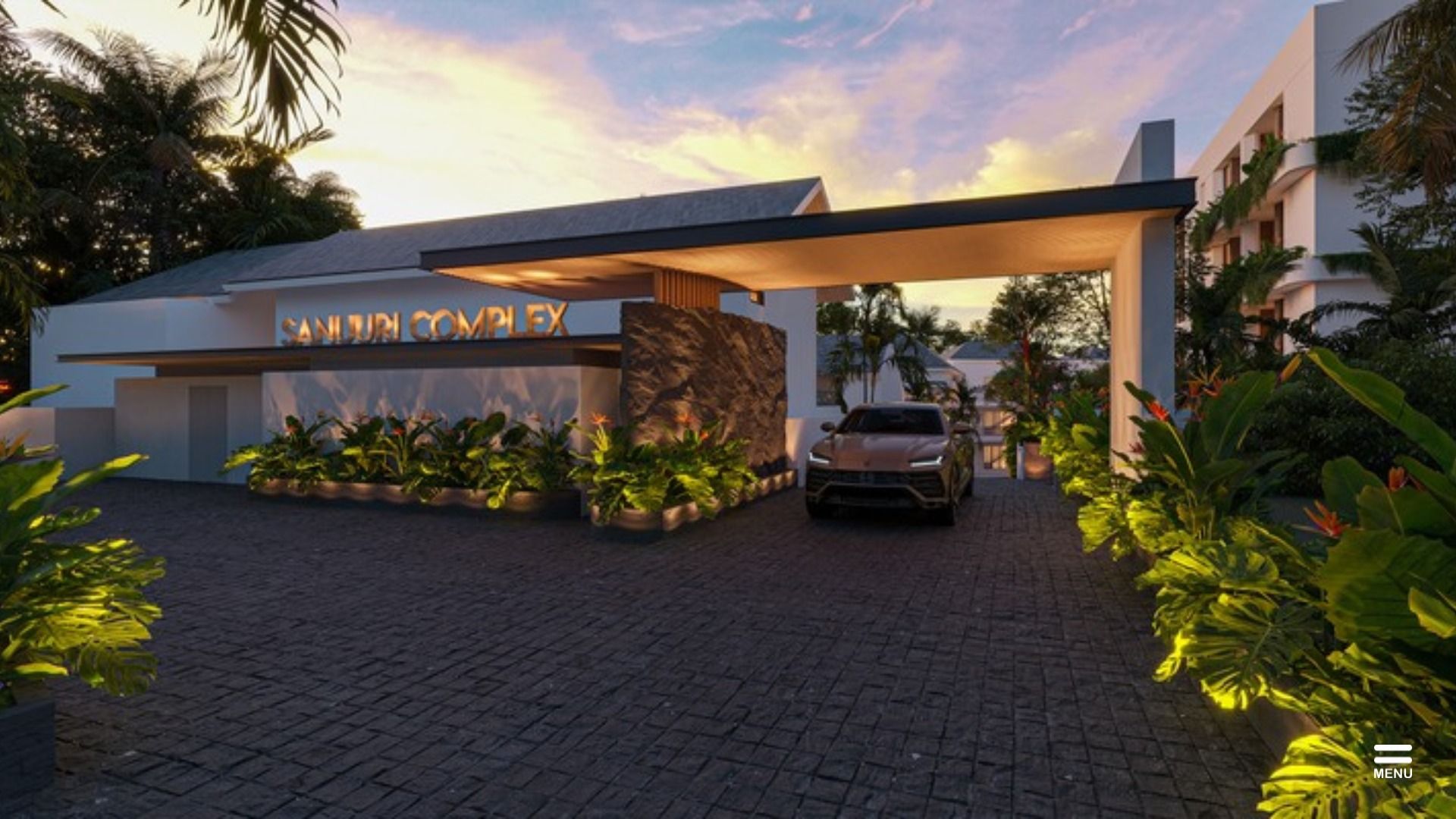
No, foreigners cannot own freehold land (Hak Milik) in Indonesia, and nominee workarounds are illegal. Foreigners can, however, hold property securely through three recognised routes: leasehold (Hak Sewa), the Hak Pakai right-to-use title for residence permit holders, or a PT PMA foreign-owned company holding Hak Guna Bangunan, each giving decades of legal tenure.
Key takeaways
- Freehold (Hak Milik) is reserved for Indonesian citizens under the 1960 Basic Agrarian Law. There are no exceptions for foreigners.
- Leasehold (Hak Sewa) is the standard foreign route: contractual, no visa required, typically 25 to 30 years in Sanur with extension options.
- Hak Pakai (Right to Use) is a registered land title for KITAS or KITAP holders: 30 years, extendable and renewable to 80 years in total.
- A PT PMA foreign-owned company holding HGB (Right to Build) suits owners running a rental business, with tenure up to around 80 years.
- Nominee arrangements, where an Indonesian citizen holds freehold on your behalf, are illegal and unenforceable. Courts side with the nominee.
Can foreigners own freehold property in Indonesia?
No. Indonesia's Basic Agrarian Law, Law No. 5 of 1960, reserves the freehold title Hak Milik exclusively for Indonesian citizens. A foreign national cannot hold it, a foreign company cannot hold it, and marrying an Indonesian citizen does not transfer the right to you. This has been settled law for more than six decades and no reform currently on the table changes it.
That headline rule is where most confusion starts, because plenty of marketing copy blurs the line between owning land and holding secure, transferable rights over land and buildings. The second is entirely achievable. Indonesia has built specific legal instruments for foreign occupation and investment, refined most recently by Government Regulation 18 of 2021, and tens of thousands of foreigners hold Bali property through them. The question is never whether you can secure property in Indonesia. It is which of the three legitimate structures fits your situation.
What can foreigners legally hold instead of freehold?
Foreigners have three recognised routes: a registered lease (Hak Sewa) over land and buildings, a Hak Pakai right-to-use title held in their own name if they have a residence permit, or an Indonesian foreign-investment company (PT PMA) holding a Hak Guna Bangunan (HGB) title. Each is legal, registrable and used every day in Bali.
| Leasehold (Hak Sewa) | Hak Pakai (Right to Use) | PT PMA holding HGB | |
|---|---|---|---|
| What it is | A registered contractual lease over land and buildings | A land title in the foreigner's own name | A company you own holds the Right to Build title |
| Typical duration | 25 to 30 years in Sanur, extensions negotiable; Sanuuri offers 50 years | 30 years, extendable to 80 in total (30+20+30) | Up to around 80 years through extensions |
| Visa or permit needed | None | KITAS or KITAP residence permit | No personal visa; company setup instead |
| Best for | Most lifestyle buyers and retirees | Long-term residents; strata apartments | Owners running property as a rental business |
| Complexity and running cost | Low | Medium | Highest: accounting, reporting, compliance |
Each route is examined in more depth in our comparison of Hak Pakai, PT PMA and leasehold structures, but the summaries below cover what most buyers need to decide.
How does leasehold (Hak Sewa) work?
Leasehold is the standard route for foreign buyers in Bali. You pay a single upfront sum for the exclusive right to the property for a fixed term, documented in a notarised lease agreement. No visa or residence permit is required, and the lease can include extension options, the right to sell the remaining term, and inheritance provisions.
The economics differ from freehold markets. You are buying time, not perpetuity, so price reflects the term: July 2026 listings show Sanur leasehold entries from roughly USD 175,000, against roughly USD 300,000 to 800,000 for freehold villas near the beach that only Indonesian citizens can hold. Typical Sanur leasehold terms run 25 to 30 years with negotiated extension options. Sanuuri Residences offers a 50-year leasehold, which is materially longer than the Sanur norm and changes both the lifestyle maths and the resale position.
The quality of a leasehold is the quality of its contract. Extension mechanics, assignment rights, what happens if the underlying landowner sells, and who registers what with the notary all belong in the deed, not in a handshake. We break down the clauses that matter in leasehold versus freehold in Bali, and the end-of-term question, the one every buyer over 60 quietly asks, in what happens after a 50-year leasehold ends.
What is Hak Pakai and who qualifies for it?
Hak Pakai, the Right to Use, is a registered land title that a foreigner can hold in their own name, provided they hold an Indonesian residence permit (KITAS or KITAP). Under Government Regulation 18 of 2021 it runs for an initial 30 years, extendable by 20 and renewable for another 30, giving up to 80 years in total.
Because it is a title registered at the national land office (BPN) rather than a contract with a landowner, Hak Pakai gives the strongest personal position a foreign individual can have over Indonesian residential land. It is also the route through which foreigners hold strata-title apartments. The trade-offs are the residence permit requirement and stricter eligibility rules on the property itself, which is why retirees on a KITAS often use it while pure holiday-home buyers stay with leasehold. Hak Pakai also matters for visa planning: property can substitute the Second Home Visa's IDR 2 billion deposit, but only property worth USD 1 million or more held under Hak Pakai, as we explain in our guide to Indonesia's E33 Second Home Visa.
When does a PT PMA company make sense?
A PT PMA is an Indonesian limited company with foreign shareholders. The company, not you personally, holds a Hak Guna Bangunan (Right to Build) title, which through extensions can secure the property for up to around 80 years. It is the right structure when the property is genuinely a business, typically a villa or portfolio run for rental income.
The strengths are commercial: the company can hold HGB titles, employ staff, invoice guests, sponsor investor residence permits and be sold as a going concern. The costs are ongoing: incorporation, licensing, monthly accounting, tax filings and investment reporting continue for the life of the company. For a single home you live in part of the year, that overhead usually outweighs the benefit, and a leasehold in a managed complex achieves the same outcome with none of the reporting. For an operator building a rental business around Bali's 6.9 million foreign arrivals in 2025, a figure from BPS Bali that grew 9.7% on the previous year, the structure earns its keep.
Are nominee arrangements legal in Indonesia?
No. A nominee arrangement, where an Indonesian citizen holds freehold title on a foreigner's behalf under side agreements, is illegal and unenforceable. Indonesian courts have consistently refused to enforce the foreigner's claimed rights, because the arrangement exists to defeat the Agrarian Law's citizenship requirement.
The practical consequence is brutal in its simplicity: the person named on the certificate owns the property. If the nominee sells it, mortgages it, divorces or dies, the foreign "owner" has no protected interest to fall back on, whatever the side documents say. Money paid under an unlawful structure is extraordinarily difficult to recover. However polished the presentation, a nominee structure is not a budget alternative to leasehold. It is an unsecured loan to a stranger, dressed as a purchase. Any agent or lawyer proposing one has told you everything you need to know about their standards.
What taxes and costs come with buying through these structures?
The transaction taxes are the same family whichever legitimate route you use. Per PwC's Indonesia tax summaries, the buyer pays BPHTB transfer tax of 5% of assessed value on registered title transfers, the seller pays 2.5% final income tax, and new builds bought from developers attract VAT of around 11 to 12%. Annual land and building tax (PBB) has a statutory maximum of 0.5% of assessed value but lands at roughly 0.1 to 0.3% in practice, a minor line item.
On top of tax sit notary fees, legal review and, for PT PMA owners, company running costs. Rental income has its own regime, a 20% final withholding on gross rent for non-resident owners and 10% for tax residents, which we cover separately. Budget the full stack before comparing deals; a cheap headline price with an unclear title is the most expensive property in Bali.
Which route should you choose?
For most foreign buyers the decision resolves quickly. Buying a home or lock-up-and-leave base with no plans to run a business: leasehold, the simplest and most common route. Living in Indonesia long term on a KITAS or KITAP, or buying a strata apartment: Hak Pakai in your own name. Running a genuine rental business: PT PMA with HGB.
Sanur illustrates why structure and location decide outcomes together. The town is the anchor of Indonesia's first health special economic zone, KEK Sanur, a 41.26-hectare project with roughly USD 620 million in projected investment under Government Regulation 41 of 2022, and the Bali International Hospital there opened on 25 June 2025. Infrastructure like that supports long-term tenure decisions in a way no beach-club opening ever will. Whichever structure you choose, run the process with an independent notary and full due diligence, step by step as set out in our complete guide to buying property in Bali as a foreigner.
Frequently asked questions
Can foreigners buy land in Bali?
Not as freehold. Freehold land title (Hak Milik) is reserved for Indonesian citizens under the 1960 Basic Agrarian Law. Foreigners instead secure land and buildings through a registered lease (Hak Sewa), a Hak Pakai right-to-use title if they hold a residence permit, or a PT PMA foreign-owned company holding a Hak Guna Bangunan title.
Is a nominee arrangement safe if a lawyer drafts the documents?
No. Nominee arrangements are illegal and unenforceable in Indonesia regardless of how professionally the side agreements are drafted. Indonesian courts have consistently refused to protect the foreign party, and the registered Indonesian owner keeps the property. No reputable lawyer should propose one.
How long can a foreigner lease property in Indonesia?
Lease terms are contractual. In Sanur most residential leaseholds run 25 to 30 years with negotiated extension options, while some developments offer longer initial terms; Sanuuri Residences, for example, offers a 50-year leasehold. Hak Pakai titles run 30 years and can be extended and renewed to 80 years in total.
Can leasehold or Hak Pakai property be inherited or sold on?
Generally yes, subject to the documents. A well-drafted lease allows assignment of the remaining term and transfer to heirs, and Hak Pakai titles can pass to qualifying heirs under Indonesian land rules. Have the transfer and inheritance clauses checked by a notary before you sign, not after.
Do you need a visa to buy property in Indonesia?
Not for leasehold, which is purely contractual and open to any foreigner. A Hak Pakai title in an individual name requires a residence permit such as a KITAS or KITAP. Owning through a PT PMA company requires setting up the company, not a personal visa.
Sources
- Law No. 5 of 1960, the Basic Agrarian Law of Indonesia
- Government Regulation 18 of 2021 on land rights and strata units
- PwC, Indonesia Tax Summaries, 2026 edition
- Government Regulation 41 of 2022 establishing the Sanur special economic zone
- BPS Bali, foreign visitor arrivals releases, 2026
- Sanur residential listings survey, July 2026