
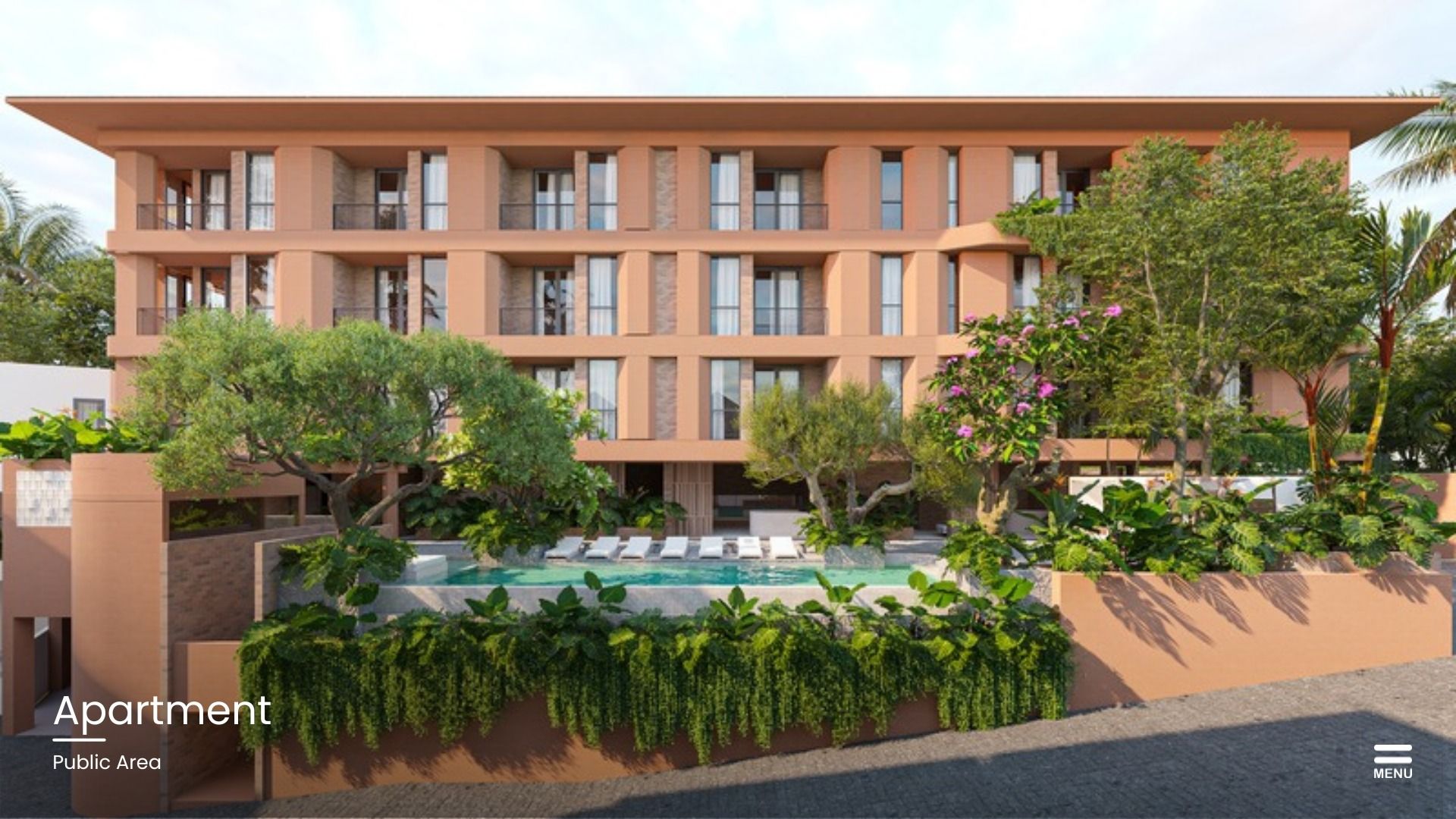
Vet a Bali developer by verifying the land certificate and zoning through a notary, sighting the PBG building approval, checking the company's legal entity and completed projects, and structuring payments against construction milestones in a notarised PPJB. Any developer who resists these checks, including ours, has not earned your deposit.
Key takeaways
- Verify three things before any money moves: land title in the correct entity's name, residential or tourism zoning (ITR), and a PBG building approval.
- Pay only through a notarised PPJB with payments tied to construction milestones. Heavy upfront schedules transfer the developer's risk to you.
- Track record is physical, not digital: visit completed projects, knock on doors, ask owners about snagging and handover dates.
- Nominee land structures behind a project are illegal and poison everything built on them. Confirm how the developer actually holds the land.
- Apply every test in this article to Investland Bali and Sanuuri Residences. We publish this checklist because we can pass it.
What should you check before paying a Bali developer?
Before paying anything beyond a modest, refundable reservation fee, you should have independently confirmed four things: who legally holds the land, what the land is zoned for, that a building approval (PBG) exists, and what happens to your money at each stage of construction. Those four checks together eliminate the large majority of off-plan failures.
Off-plan buying is how most new stock reaches the Bali market, and demand keeps pulling new projects out of the ground: BPS Bali recorded 6.9 million foreign arrivals in 2025, up 9.7 percent on 2024, and developers build ahead of that curve. Most complete their projects. The minority who do not tend to fail in recognisable ways, on land they never properly controlled, without permits, or on cash-flow models that needed the next buyer's deposit to finish the last buyer's villa. Our 21-point due diligence checklist covers property purchases generally; this article is the developer-specific layer on top.
How do you verify land title and zoning?
Ask the developer for a copy of the land certificate and give it to your own notary (PPAT), who verifies it against the National Land Agency (BPN) registry. The certificate must be in the name of the entity granting your lease or title, and it must be free of undisclosed mortgages and disputes. Then confirm through the ITR spatial plan that the zoning permits residential or tourism accommodation.
Pay attention to how the developer's structure connects to the land. A foreign-owned developer legitimately operates through a PT PMA holding HGB (Right to Build), or builds on leased land under Hak Milik with your sub-lease carved out of the head lease. What is never legitimate is a nominee arrangement, where an Indonesian citizen fronts the freehold on the developer's behalf; nominee structures are illegal and unenforceable, and a project standing on one is compromised no matter how good the show unit looks. If your rights derive from a head lease, your notary should confirm the head lease term comfortably exceeds the term you are being sold. The contract mechanics are explained in our guide to notaries, PPJB and lease deeds.
Which permits must exist before construction starts?
The document that matters is the PBG (Persetujuan Bangunan Gedung), the building approval that replaced the old IMB. A project marketed without a PBG is a drawing, not a development. At completion, the building should also receive an SLF (certificate of functional worthiness) confirming it was built to the approved plans.
Permit checks take days and cost little compared with what they protect. Ask for the PBG number and let your notary or lawyer confirm it corresponds to the land parcel and the building type being sold; a permit for a private house does not cover a commercial villa complex. On cost modelling, remember that new-builds from developers attract VAT of around 11 to 12 percent per PwC's Indonesia tax summaries, and the buyer pays BPHTB transfer tax of 5 percent of assessed value where a title transfer applies. A developer whose pricing is silent on tax treatment is leaving you to discover it later.
How should off-plan payments be structured?
Payments should follow construction, not precede it. The market-standard protection is a notarised PPJB that fixes the specification, price, completion date, penalties for delay and a milestone payment schedule. You pay when independently verifiable stages complete, and a meaningful final tranche stays in your pocket until handover.
| Stage | Protective structure | Red-flag structure |
|---|---|---|
| Reservation | Small fee, refundable if diligence fails | Large non-refundable deposit before documents are shown |
| Contract signing | Notarised PPJB; first substantial payment | Informal reservation form or invoice only |
| During construction | Instalments released against verified milestones (foundation, structure, roof, fit-out) | Fixed calendar payments regardless of site progress |
| Pre-handover | Final tranche held until snagging is resolved | Full payment demanded before inspection |
| Incentives | Modest early-bird pricing on published schedule | Steep discounts for paying 100 percent upfront |
The right-hand column is not always fraud. Sometimes it is just a developer financing construction with buyer deposits, which means you are the bank, unsecured and uncompensated. Discounts for full upfront payment are the market pricing your risk and paying you in kitchen upgrades. Detailed schedule patterns and what each protects are in our guide to off-plan payment plans.
How do you judge track record and build quality?
Track record is verified with your feet. Visit at least one project the developer has completed, walk it, and talk to owners about handover dates, snagging response and how the building has aged. A developer with nothing completed is not automatically disqualified, but then the paperwork and payment structure must carry the entire burden of proof.
Build-quality signals you can check without an engineering degree: visit the site unannounced and see whether work is actually progressing; ask which contractor is building and whether the developer has used them before; ask for the structural specification (concrete grades, roofing, waterproofing) in writing; and check how the show unit's finishes are described in the contract, since renders are marketing and the PPJB annexe is the promise. In a tropical climate, ask specifically about drainage, damp-proofing and ventilation, because those are where cheap builds reveal themselves within two rainy seasons. The broader catalogue of deception patterns, from resold units to phantom projects, is in Bali property scams and how to avoid them.
What should you ask Investland Bali about Sanuuri?
Everything above. Sanuuri Residences in Sanur is developed by Investland Bali, and we would rather lose a sale than meet a buyer who skips diligence, because that buyer is this market's biggest systemic risk. Ask us for the land certificate for the Sanuuri site, the PBG approval, the PPJB template with its milestone schedule, and the 50-year leasehold terms in writing.
Then go further. Inspect the site in person, or take the 3D walkthroughs at tours.sanuuri.com and follow up with a video call from the site itself. Ask how the rental management agreement works after handover, since we manage short and long stays in-house. Ask why we chose Sanur, and test the answer against the public record: the KEK Sanur health special economic zone carries roughly USD 620 million in projected investment under Government Regulation 41 of 2022, and the Bali International Hospital opened there on 25 June 2025, an eight-minute drive from the residences. A developer's location thesis should survive contact with the facts. So should the developer.
Frequently asked questions
Is buying off-plan in Bali safe?
It is safe when the land title and building approval exist before you pay, the contract is a notarised PPJB, and payments track construction milestones. It is unsafe when any of those three is missing. The format is not the risk; the process is.
How much deposit is normal for off-plan property in Bali?
A reservation fee followed by a contract-stage payment is standard, with the balance spread across construction milestones and a final tranche at handover. Be cautious of schedules demanding most of the price before construction starts, and of large discounts offered for paying everything upfront. Those discounts price in the risk you are absorbing.
What is a PPJB and why does it matter?
A PPJB (Perjanjian Pengikatan Jual Beli) is a binding sale-and-purchase agreement executed before a notary. It fixes the specification, price, payment schedule, completion date and penalties before title or lease rights transfer. Without it, your payments rest on an informal promise rather than an enforceable contract.
Can I check a Bali developer's land certificate myself?
Not directly, but your notary (PPAT) can verify the certificate against the National Land Agency (BPN) registry, confirm the landholder's identity and check for encumbrances. Any credible developer will hand over certificate copies and permit numbers for exactly this purpose. Refusal to do so is a decisive red flag.
Should I vet Investland Bali, the developer behind Sanuuri?
Yes, with the same rigour as anyone else. Ask for the land certificate for the Sanuuri site, the PBG building approval, the notarised PPJB template with its milestone schedule, and references from existing buyers. A developer who expects your money without expecting your questions is the one to avoid.
Sources
- BPS Bali (Statistics Indonesia, Bali Province), foreign arrivals data, 2025 to 2026
- PwC, Indonesia tax summaries, 2026
- Government Regulation 41 of 2022 (KEK Sanur health special economic zone)
- Bali International Hospital opening, 25 June 2025